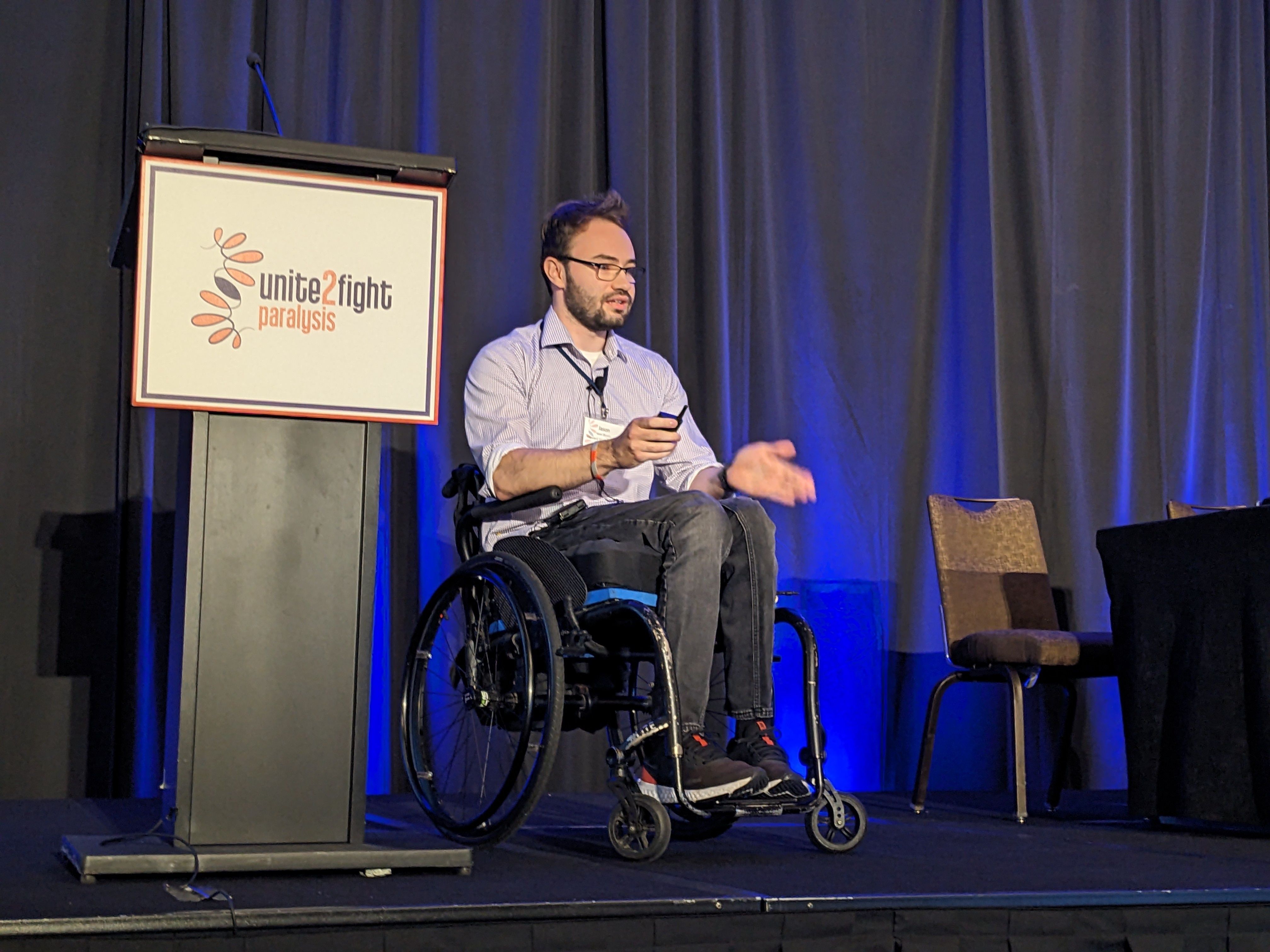

Abel Torres Espín, PhD
Assistant Professor, School of Public Health Sciences, University of Waterloo
Abstract
Moving Forward with AI and Health Data
AI (artificial intelligence) and health informatics can transform the landscape of spinal cord injury (SCI) research and clinical care by enabling predictive modeling, dynamic mapping of therapeutic pathways, and challenging existing healthcare conventions. This presentation explores how these technologies can accelerate SCI research, for example, for the development and integration of novel and combinatorial therapies for SCI. Leveraging AI, we can gain insights from heterogeneous data sources, ranging from electronic health records (EHRs) to biomedical literature, to reveal hidden relationships between interventions, biomarkers, and patient outcomes. Health informatics frameworks further support real-time decision-making and resource allocation, ensuring that emerging therapies are not only scientifically validated but also operationally feasible within current healthcare systems. I will provide a summary of our work on using EHR data for SCI, highlighting its potential to optimize care. By combining AI-driven hypothesis generation with informatics-based implementation strategies, this approach aims to bridge the gap between discovery and delivery, ultimately redefining standards of care for patients with SCI.
Bio
Abel Torres Espín is an Assistant Professor at the School of Public Health Sciences at the University of Waterloo in Canada. He holds a BSc in Biology (Universitat de Barcelona), an MSc in biostatistics and bioinformatics (Universitat Oberta de Catalunya), and a PhD in Neuroscience (Universitat Autonoma de Barcelona). After his PhD, Abel pursued a postdoctoral research period at the University of Alberta with Dr. Karim Fouad, followed by a postdoctoral position at the University of California, San Francisco, in the US with Dr. Adam Ferguson. Since 2023, Abel directs the health.data DRIVEN lab and teaches health data science courses. He and his team are currently working on applying computational, statistical, causal, and machine-learning methods for neuroepidemiology and personalized health research, as well as to predict and understand disease complexity in neurological conditions. Abel is also interested in data-driven discovery, open science, reproducibility, and data sharing.