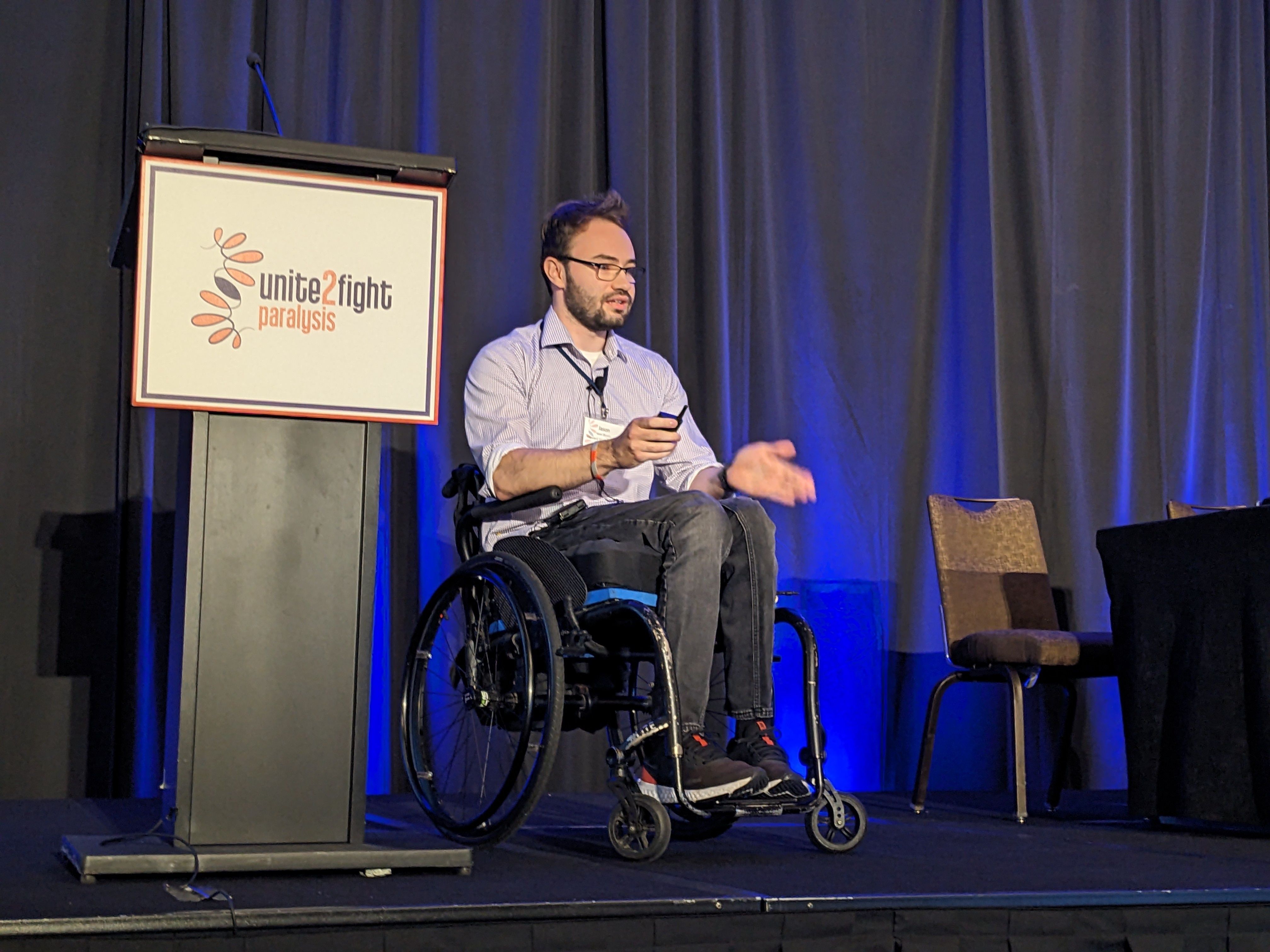

Alexander “Sasha” Rabchevsky, PhD
Professor of Physiology, University of Kentucky
Abstract
Hope and Trust? Perspectives from an Anomaly in Translational SCI Research
The NIH-sponsored Decade of Disruption meeting in 2020 proved provocative when individuals living with chronic spinal cord injury (SCI) voiced concerns that the scientific field is overly invested in restoring locomotion in animal models while failing to prioritize secondary complications and outcome measures that truly determine quality of life. Many researchers reacted defensively, reinforcing a perception that the scientific community lacks urgency despite knowing the shortened lifespans associated with chronic autonomic and metabolic dysfunction after SCI. Although investigators have since come to better appreciate the intent behind these critiques, the SCI research field has long been marked by cycles of hype and misleading headlines surrounding regeneration and walking—patterns I have witnessed throughout my 40 years living with paralysis and conducting research. Despite Kim Anderson’s seminal 2004 survey defining the priorities of people with SCI, funding for locomotor restoration continues to eclipse research addressing bowel, bladder, sexual, and autonomic dysfunction. Consequently, much basic preclinical SCI research has become repetitive, incremental, and difficult to reproduce, even as healthcare costs escalate amid a growing crisis in access to specialized SCI medicine, neurogenic bowel and bladder care, and wound management. Accelerated aging and declining quality of life among people with chronic SCI still underscore the urgency for meaningful disruption. We are now at an inflection point when basic biology of regeneration has not translated into robust preclinical models or clinical regenerative medicine, while spinal cord stimulation has emerged as a new standard for partial functional recovery alongside traditional physical medicine and rehabilitation. Drawing on my experience as a clinical trial participant, preclinical neuroscientist, and non-profit investor in SCI research and advocacy, I will address the misalignment among research funding priorities, current medical care, and inequity for people living with paralysis before offering perspectives on what can be done and what not to repeat.
Bio
Alexander “Sasha” Rabchevsky is a tenured Professor of Physiology at the University of Kentucky in Lexington, KY and is a founding member and core faculty of the U.K. Spinal Cord & Brain Injury Research Center (SCoBIRC). His laboratory has investigated a variety of therapeutic approaches to treat spinal cord injury (SCI), during which time he has received meritorious awards for neurophysiology lecturing and mentoring of undergraduate, graduate, and medical students over his tenure. Employing various rodent SCI models to deliver pharmacological treatments and/or gene therapy, his preclinical research aims to alleviate acute hemodynamic/autonomic dysfunctions as well as hindlimb locomotor impairments. Sasha is well recognized for advancing the understanding autonomic pathophysiology and intraspinal plasticity contributing to autonomic dysreflexia, notably the previously undocumented regenerative sprouting of ascending propriospinal neurons. He has alternatively pioneered approaches to pharmaceutically target damaged host mitochondria, as well as transplanting exogenous mitochondria to restore bioenergetics and promote functional neuroprotection after contusion SCI.