June 4, 2026
Advance & Defend Federal SCI Funding
Jason Stoffer
I’m writing with two opportunities to flex your advocacy muscles. Both of these actions are quick and keep the SCI community’s functional recovery priorities on our Federal lawmakers’ radars.
1. Thank SCIRP Co-signers
On May 12th 2026, Senator Roger Wicker (R-MS) and Senator Dick Durbin (D-IL) wrote a letter to the defense appropriators in the Senate, urging them to prioritize and increase the budget for the Department of Defense accounts that fund medical research, including the Spinal Cord Injury Research Program (SCIRP). The letter was co-signed by 29 additional lawmakers.
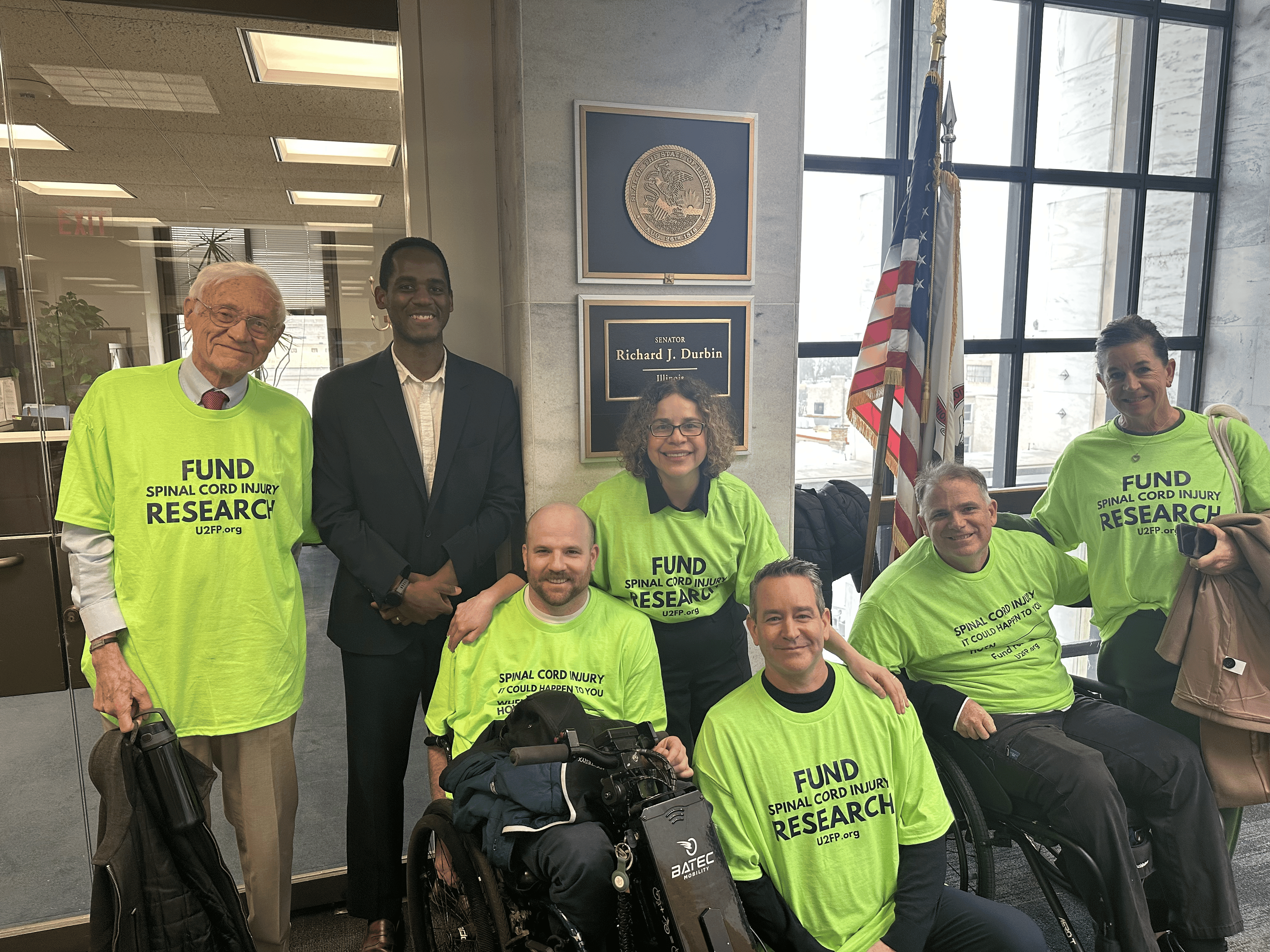
SCI Researchers and community members met with Sen. Dick Durbin’s office in February as part of U2FP’s Capital Roll.
The ask includes an increase of $1.62B to SCIRPs parent program, the Congressionally Directed Medical Research Program (CDMRP). This would slightly more than restore CDMRPs budget to pre-FY25 levels, when the program was cut by 57% and SCIRP was zeroed out. To learn more about that dumpster fire and the work you all did to bring SCIRP back, check out these articles.
Please read through Senators Wicker and Durbin's brief letter and contact as many of the co-signers on this document as you can. If one of them happens to be your Senator, then be sure to say so, but they do not need to represent you for you to thank them. The more encouragement these co-signers get, the more likely they'll be to continue to prioritize this important funding.
When you email or call their offices you can say the following:
Dear Senator __________,
Thank you for supporting medical research through the DoD by signing the Wicker FY27 DoD Medical Research Letter. I am a [SCI individual/family member/researcher/etc] and I want to tell you that the SCIRP program under CDMRP is immensely important to the Spinal Cord Injury (SCI) community.
Almost all (96%) late-stage, human clinical trials related to SCI have been supported by SCIRP. It has been responsible for life changing research in the areas that are a priority to people living with spinal cord injuries.
I advocate with Unite 2 Fight Paralysis (U2FP). If there is any way that I or U2FP can support your office with future policy decisions around spinal cord injury, please do not hesitate to reach out!
[Your name and relationship to SCI]
2. Support SCI Model Systems
The second opportunity is being championed by our friends at United Spinal Association in support of the Spinal Cord Injury Model Systems (SCIMS). There are 18 model system rehabilitation hospitals/centers throughout the US. These centers are the gold-standard for post-injury care and specialize in neurotrauma. They also conduct clinical trials for rehabilitation research. If you attended a rehab hospital like Shepherd Center, Craig Hospital, Shirley-Ryan or Courage-Kenney, then you attended a Model System rehab center.
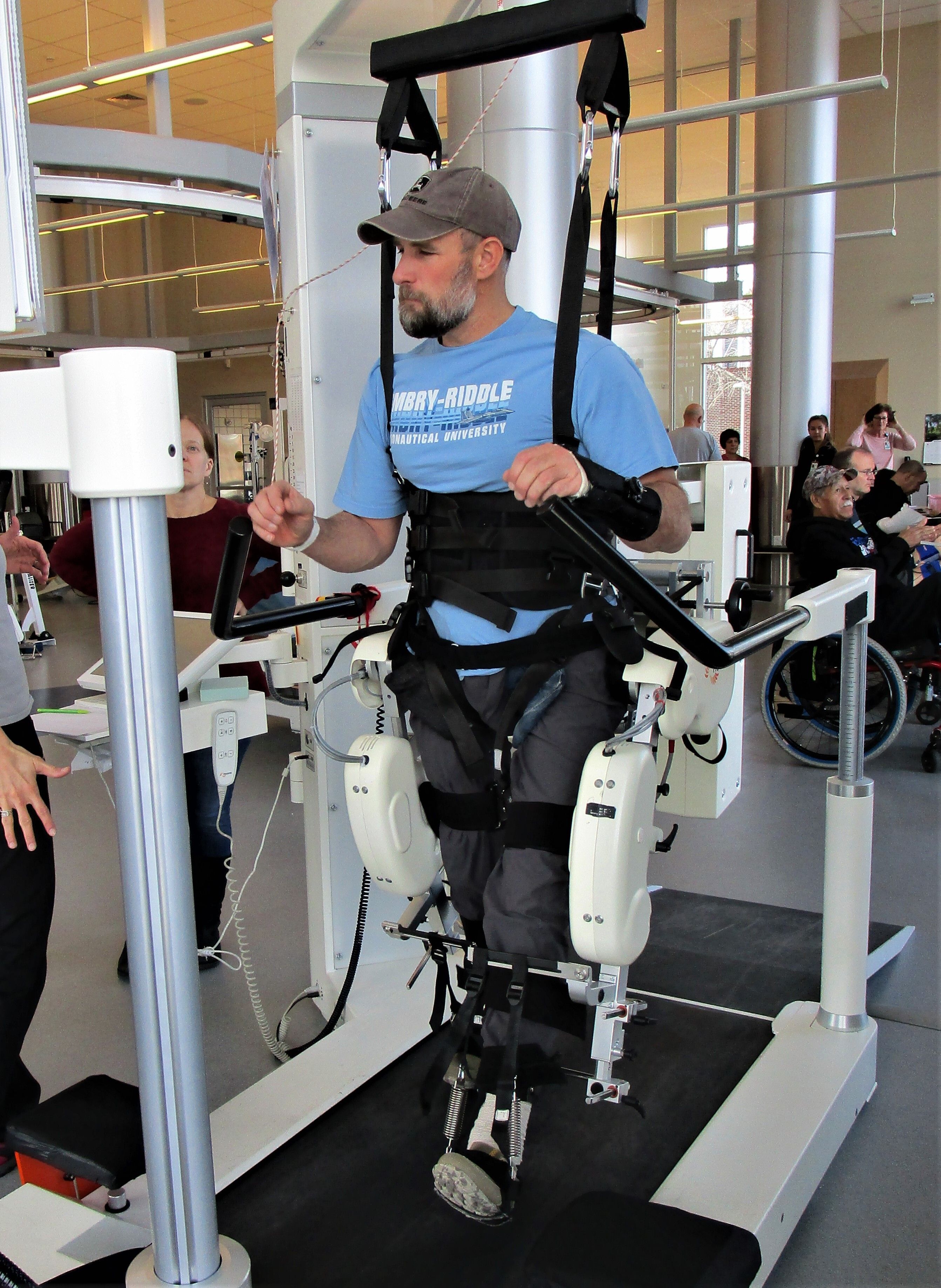
This is me getting some rehab via Craig Hospital, a Model System, shortly after my injury. The expertise, support and rehab resources that model system hospitals provide are invaluable.
SCIMS is a Federally funded program whose budget is being threatened. There are already too few of these centers of excellence and a lapse in funding would diminish care for the newly injured, vital research, and the network of information and data that supports our entire community.
Take a moment and read through this issue brief, then contact your Members of Congress (MOC) and tell them all about it!
When you take action on these two issues, please keep us in the loop! You can blind copy can@u2fp.org if you send an email or use that same email address to let us know who you contacted, which issue you addressed and any MOC replies.
Lets Gooooooo!