August 11, 2026
Chris Barr - Monthly Donor Spotlight
Chris Barr
I was injured in February of 2017. As a quadriplegic, research funding was the last thing on my mind in those early days of my injury. I was trying to understand my new reality and figure out how I could regain some independence. There’s a saying that paraplegics take two months to figure things out and quadriplegics take two years. So it wasn’t until 2019 that I started asking the questions that led me to U2FP. I had just finished a clinical trial and was really frustrated at the pace of functional recovery research.
NorCal SCI co-founder Franklin Elieh (a great guy who sadly passed away far too young from complications related to his spinal cord injury) invited me to attend U2FP’s Annual Symposium, which is a Who’s Who of elite researchers and advocates in the spinal cord injury space.
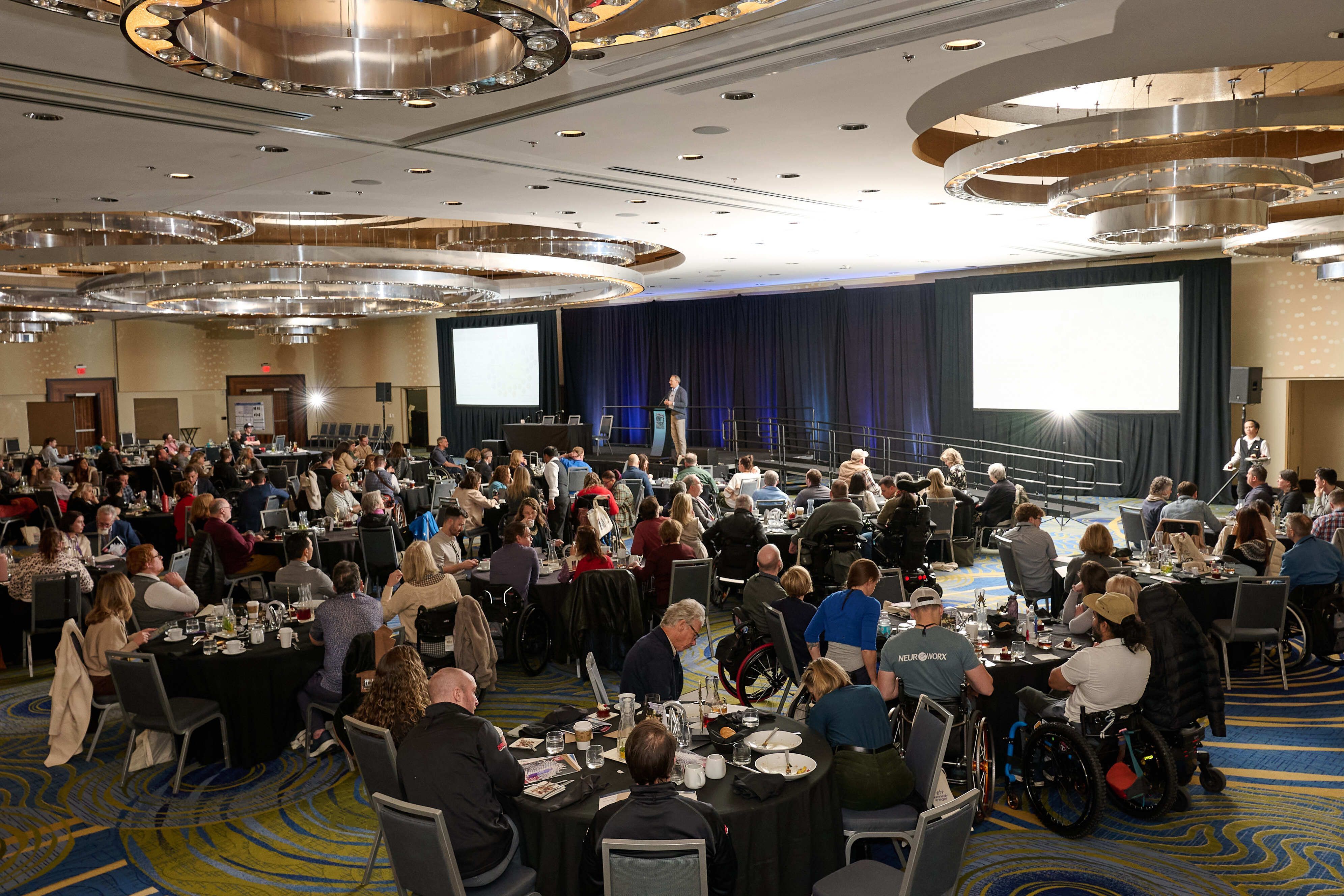
The symposium helped me start paying attention to the bigger picture. At the time, I was working with several SCI organizations, but they were primarily focused on care. Care was and is important but I was still struggling - like many quads - to gain a sense of independence that I felt only new, novel interventions could deliver. This made U2FP appealing since they were laser focused on finding a cure. Moreover, their strategy struck me as really smart. I had a career in finance and the first thing you learn in business school is that efficiency is the low-hanging fruit. And the easiest way to improve efficiency is through effective communication - connecting the dots and facilitating better collaboration between all the stakeholders in a given field. This was exactly what U2FP was and is doing. I also loved the fact that U2FP is not a bunch of people just whining. I always say it’s better to light a candle than curse the darkness, and U2FP does that. I chose to donate monthly because I recognized very quickly that damage to the central nervous system is so complex and so dynamic that it is going to require an ongoing investment. An investment in U2FP helps keep the research system focused on functional recovery, which I see as critical to regaining my independence. |
To get real about what I mean by independence and functional recovery for a second: I’m an incomplete C3-C4, AIS D quad. The good news is that I have a meaningful amount of motor function. The bad news is that I live with a slew of secondary complications. If you’ve never experienced—or even heard of—autonomic dysreflexia, it can be excruciating. I dysreflex every day, triggered by things as simple as being uncomfortable or when I have to pee. It’s my body launching a hypertensive crisis due to crossed wires in my nervous system - it’s like having a stroke. Every day.
I hate talking about this stuff because no one wants to hear it (including me, I live it after all). But it underscores the importance of developing interventions that will alleviate this kind of suffering for myself and others with my injury level.
U2FP understands this, because it is staffed and led by people who live with the injury and/or are directly connected as family caregivers. It’s why they are so motivated to connect the dots between researchers, scientists, funders, clinicians, industry representatives and advocates. It's easy to assume that these stakeholders would be collaborating on their own already, but the system doesn’t reward them for doing that. They don’t have the time or incentive to be collaborative in the way they need to be. This is why U2FP is so critical.
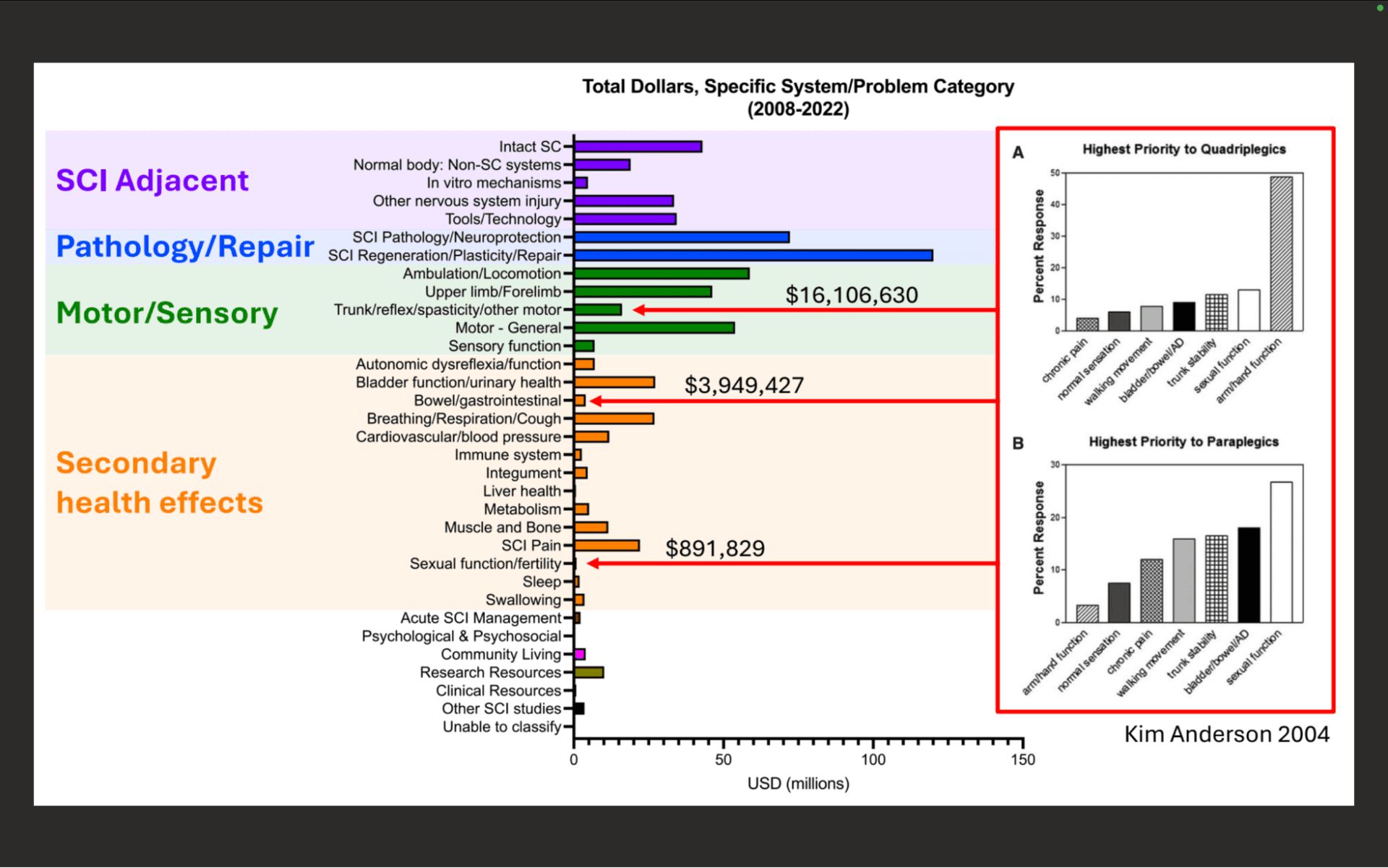
Finally, I love U2FP because they are a team of ass-kickers. They’re not afraid to push back against a system that too often disincentivizes collaboration.
A great example is when Matthew introduced me to Dr. Jen Dulin at Texas A&M and invited me to be a part of her academic analysis of SCI funding over the last 15 years (Funding Distributions, Trends, Gaps, and Policy Implications for Spinal Cord Injury Research: A Systematic Analysis of U.S. Federal Funds, source of the above graphic). From that experience we’ve now developed a website which will be launching soon. It catalogs over $2 billion in SCI research funding, including more than 5,000 grants that are organized by their objective, intervention, and readiness level. We hope it will serve as a resource for grant writers and grantors. This kind of collaboration and connection is so critical, and is illuminating for the field. It is another great example of U2FP lighting a candle in the darkness, instead of just cursing it.
As I’ve said, for me, functional recovery means independence. And U2FP's commitment to working smarter, not just louder, is what makes this organization worth supporting. I hope you’ll join me in being a monthly donor at whatever amount is right for you.