July 6, 2026
Getting Home from Oz
Jason Stoffer
On June 15th I had the honor of delivering a keynote address to several hundred researchers at the 43rd Annual National Neurotrauma Society Conference in Milwaukee, Wisconsin. The crowd was a mix of spinal cord injury (SCI) and traumatic brain injury (TBI) scientists. This was a rare opportunity to communicate with the professionals who are working to solve the problems our community faces on a daily basis.
To prepare my presentation, I asked myself: “If you had a giant billboard you could put up on the research interstate highway, what message would you want everyone to see?” After much deliberation to land on a singular, critical topic, I decided to be blunt, honest and just say everything. And if you have the patience to read a longer than usual newsletter, I’ll tell you what I told them.
A Little About Me
I landed in the spinal cord injury community in 2017. For nine years I have been trying to find answers to three very basic questions: 1) Why are there no substantial medical interventions for spinal cord injury? 2) Why was I delivered a message of finality in the hospital instead of an assortment of recovery options? And 3) why, after nine years of living with this condition, are there still no solutions?
The years since my injury have felt like a hunt for clues, or an attempt to “look behind the curtain.”
And that’s how I found the theme for my NNS presentation: The Wizard of Oz! I’ve felt like Dorothy, thrown into a parallel universe and trying to get back home. There couldn’t be a more apt metaphor to relay the confusion and frustration of my SCI experience.
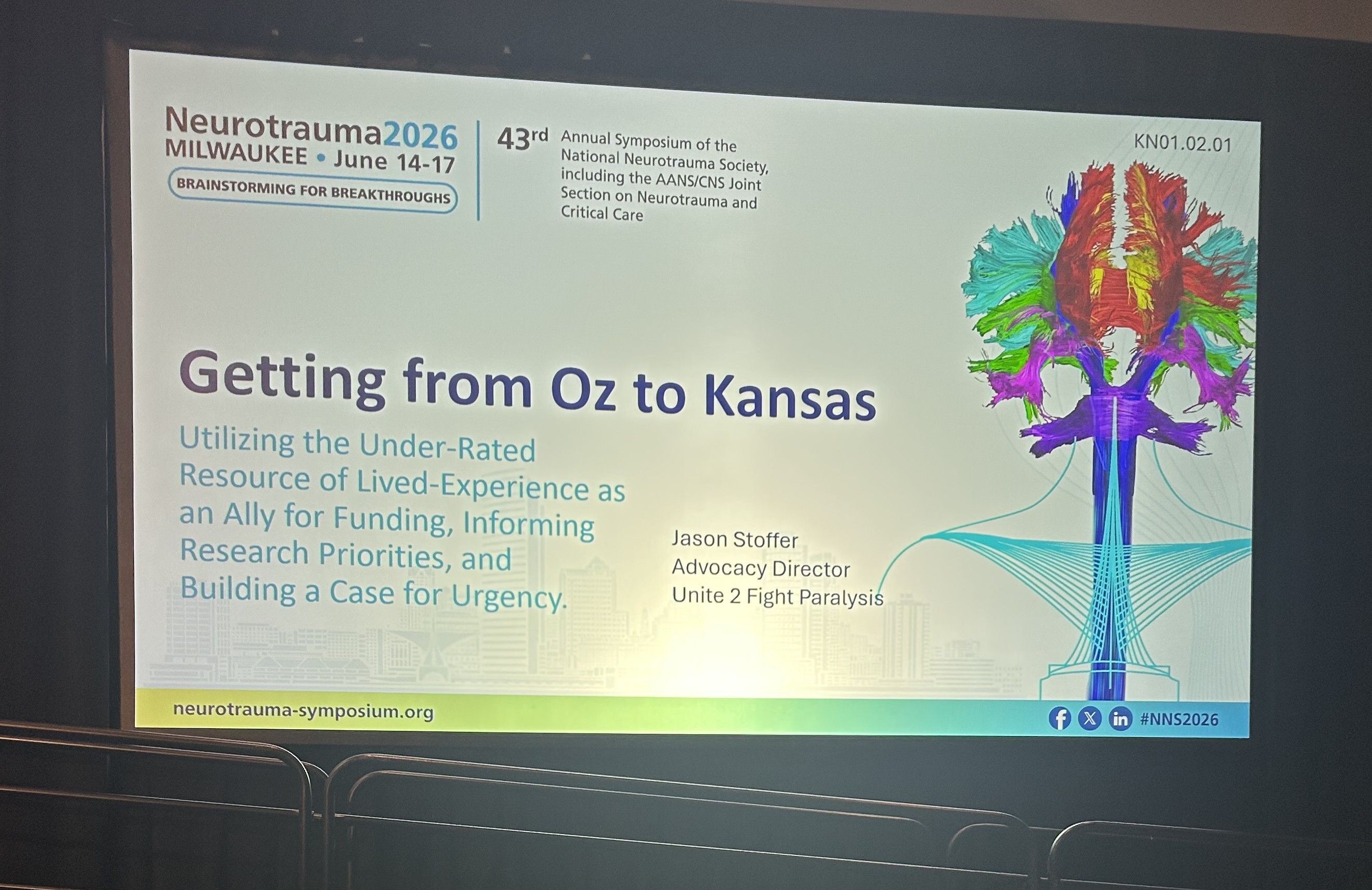
U2FP and individuals like YOU who are involved in this research and advocacy work are the friends I found in Oz. We are all united in our purpose to find answers. In 2019, at U2FP’s Annual Symposium in Cleveland, I asked a simple but difficult question during one of the panel discussions: “What is the plan?” (Or, in the language of Oz: Is there a Yellow Brick Road?) The answer I got back in 2019 was essentially: sort of, but not really.
Since then, I’ve gone into full advocate mode, diving into my role here at U2FP and engaging with nearly every facet of the SCI research and advocacy world. I’ve logged hundreds of hours doing the following:
- conversing with researchers and other stakeholders on U2FP’s CureCast podcast
- building community with our state advocates and meeting with state lawmakers
- reviewing SCI research grant applications
- scheming with my U2FP comrades on staff calls
And I've logged many more hours talking with the FDA, lawmakers on Capitol Hill and representatives from other advocacy organizations. With those experiences during the last seven years under my belt, I feel confident enough to say that I’ve looked behind the curtain and settled on some answers.
First and foremost, neuroscience is DIFFICULT. Many researchers have told us that their motivation to enter this field is due to the challenge that it presents. Beyond this, the culture and systems undergirding research science have three main problems: a lack of urgency, a lack of resources and a lack of coordination.
The Urgency Problem
Because the SCI population is too small to be easily profitable for industry (i.e. big pharma and big bio/tech companies), we rely on academia and public funding to find answers. But academia doesn’t have the resources nor is it incentivized to deliver answers to difficult medical issues. The western academic tradition values the expansion of knowledge as an end in itself. Research is not required to lead to some beneficial health outcome; moreover, purists would say that to direct research to a specific outcome would add too much subjectivity to an objective process.
The field is full of incredible, hard-working scientists who care deeply about the SCI community, but they currently operate in a system that does not support bold ideas. Early in their careers, they must prove their worth by publishing. Successful publishing requires being right about your question. Being right, consistently, requires asking conservative questions. This leads to incremental, slow change at best. Several researchers have told us privately that they are rewarded for publishing papers, securing grants (and the indirect income those grants provide for their institution) and placing their students at elite or prestigious postdoctoral positions.
Frustratingly, they are NOT rewarded for their discoveries or impact on the people who live with the condition they are ostensibly trying to fix.
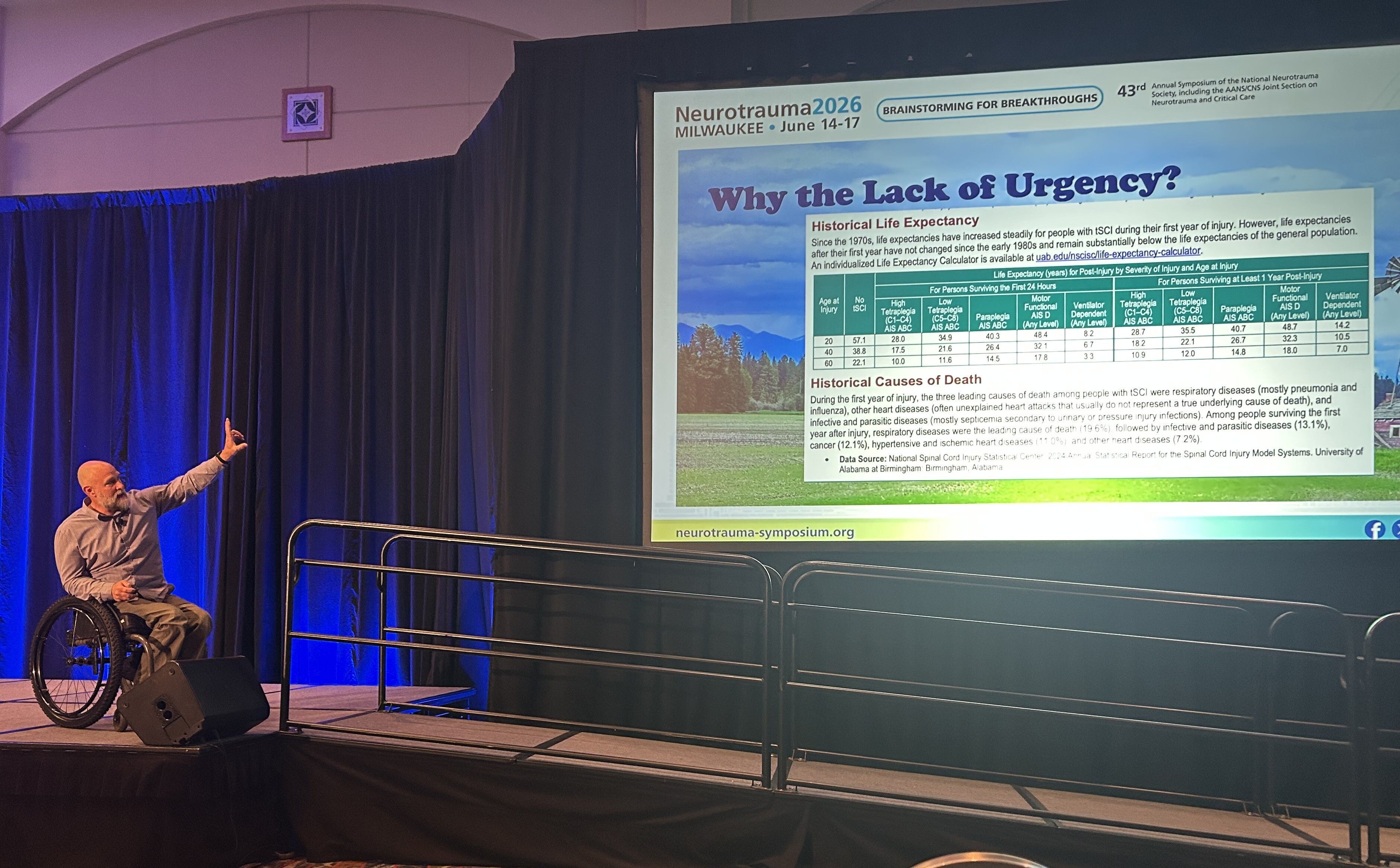
A researcher ally of U2FP summed it up this way: “We are asking conservative questions and making bold interpretations, when we should be asking bold questions and making conservative interpretations.”
You cannot cultivate an urgency to solve the problems of SCI separate from the people who live with SCI. It is one thing to understand spinal cord injury intellectually within the walls of a university or laboratory; it is quite another to understand it from the perspective of the community.
Urgency comes from having friends with a spinal cord injury whose suffering you experience first-hand; whose long routines for basic care (bowel programs, catheterization, etc) impact your schedule too; who you lose from time to time to the black hole of the healthcare system for days or weeks due to pressure sores, UTIs and a host of other preventable maladies. Sometimes they are in the hospital so long you worry if they’re going to make it back out.
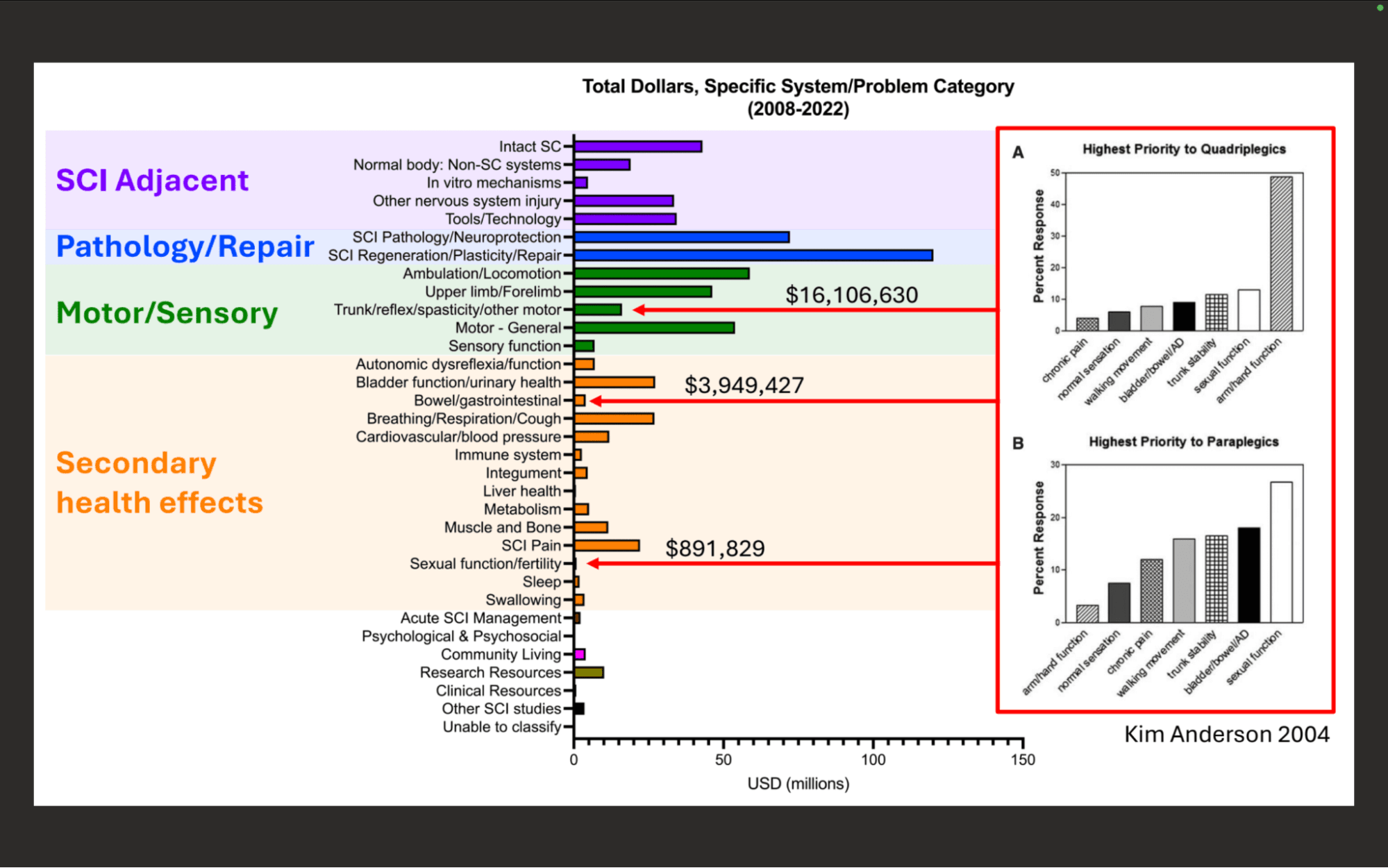
The investment of research dollars tells the tale of this disconnect. Dr. Jennifer Dulin’s multi-year analysis of SCI studies that were being submitted by researchers and funded by the largest grant programs from 2008 to 2022 is a peek into what was formerly a black box. Early, basic science around regeneration and neuroprotection is consuming the majority of funds, while the secondary conditions that matter most to us with the injury hardly show up on the graph.
Take a look at Dr. Dulin’s slide from the U2FP symposium in Atlanta, which compares spending and academic research priorities with the priorities of our community, as detailed in Dr. Kim Anderson’s 2004 study. Notice, for example, that sexual function research is the #1 priority for paras and the #2 priority for quads, but the category hardly shows up on the graph of research investment.
The Coordination Problem
When I looked behind the curtain, the most surprising revelation was that there is no Wizard. After my injury, I had assumed that there was some organized effort; that someone or some institution or coalition had a plan. In every job I’ve had before, whether it was finding lost people in the wilderness, fighting wildfires, building houses or serving a warrant, it all started with organization: you set an objective, made a plan, established communications, coordinated resources and then moved forward with purpose.
When I think about the vastness of the research ecosystem, what is summoned in my mind is Chaos Theory. Sure, there is a semblance of “self organizing systems,” but it exists at the level of a lab or institution. The result is that coordination quickly breaks down and it's a bit of a free-for-all. A lot of hard and good work is happening, but it is happening in silos. There isn’t much consideration for where or whether this hard work fits into a unified plan of delivering clinically relevant interventions to people. Worse yet, all of these entities are in competition with each other for funding, which further stifles information sharing.
Progress requires the sharing of ideas and knowledge, but the only real opportunity for this exists at conferences and through publishing papers in journals. Attending a research conference is expensive: registration, travel and lodging can easily cost $2-3K. Getting a study published in a prestigious journal can exceed $10K. Those journals then act as a gatekeeper, determining what is valuable science. Unfortunately, this rarely lines up with what is impactful for those of us in the SCI community.
Large federal grant programs have the potential to impose a coordinated effort and influence on the direction of research questions, but they are hesitant to do so. For example, the National Institutes of Health (NIH) is the largest funder of SCI research but the majority of these grants are R-01, which are investigator-initiated grants for questions determined by scientists within their area of expertise. This means that if a researcher has an interesting idea which may or may not lead to clinical relevance, they are free to propose that idea and compete for funding.
This is in contrast to grant programs with smaller pots of money, like the Department of Defense’s Spinal Cord Injury Research Program (SCIRP), which puts out calls for necessary research within specific focus areas. The aims of granting agencies like SCIRP are determined through a vision setting process that includes input from the SCI community. Though it is comparatively small, SCIRP is the only federal research program focused on SCI and emphasizes translational therapies that will benefit our community immediately. SCIRP Coordinated with the NIH, VA and private
funders to reduce funding redundancy.
The Resource Problem
When we ask scientists, “What do you need?”, one consistent answer is given: more money. It has been painfully obvious that the field needs more resources, but until recently we haven't had the data to back up the hunch. Now we do.
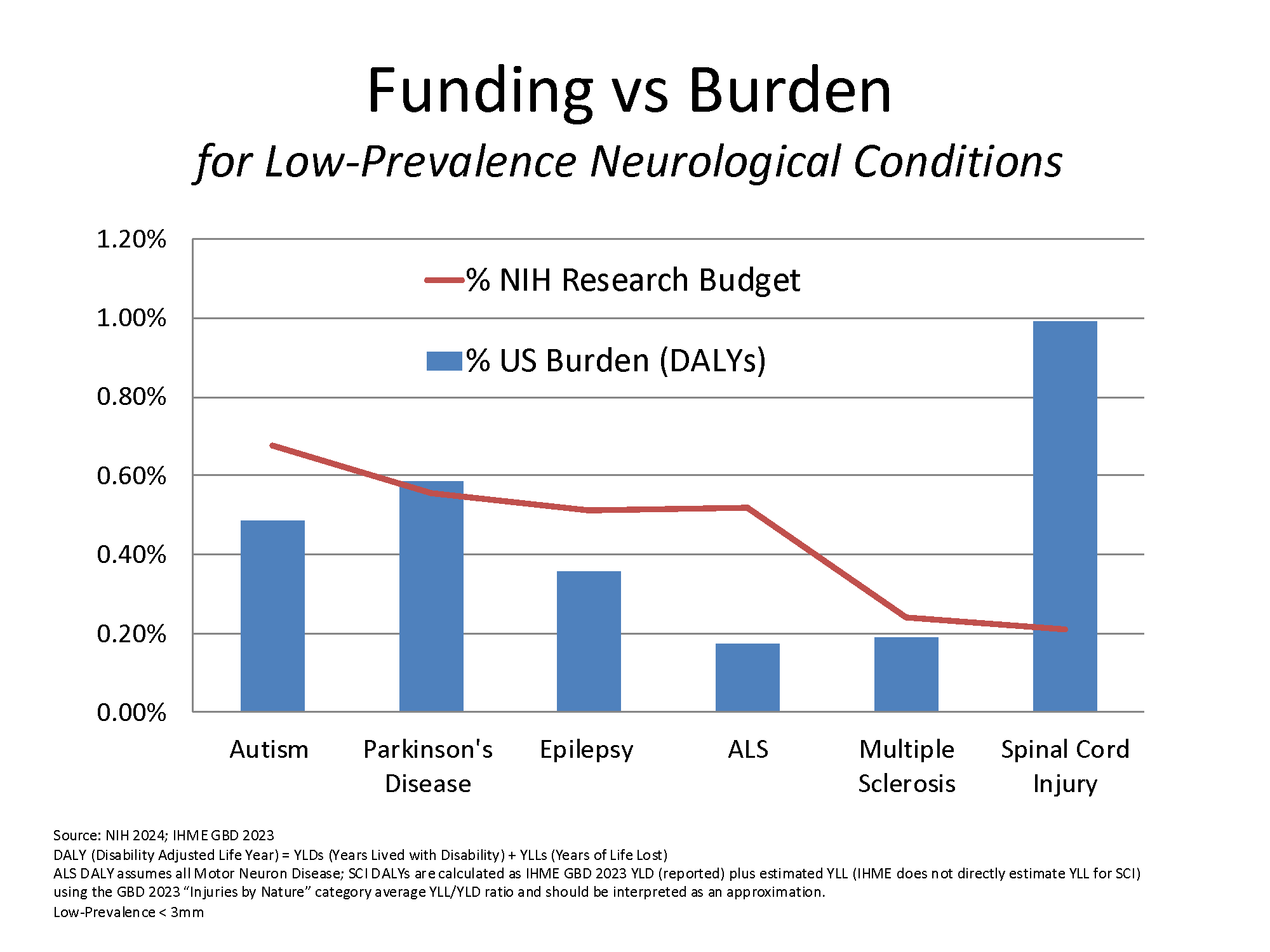
Chris Barr, who assisted in Dr. Dulin’s financial analysis referenced above, put together a graph that illustrates just how underfunded we are compared to other low-prevalence neurological conditions. The graph compares the percentage of the NIH budget being spent on a condition relative to the percent of disability burden represented by that condition in the US. We know that the NIH is the largest investor in biomedical research, so it serves as a reliable proxy for the overall US investment into SCI research.
The Disease Burden is a metric calculated by the World Health Organization (WHO) and the Institute for Health Metrics and Evaluation (IHME). In layman’s terms the disability burden is the “suck factor” of a condition combined with the years lived with that condition. It makes the argument that if taxpayers are going to invest in solving a medical problem, we should have a metric that tells us how important it is to get that problem solved.
The takeaway: SCI could stand to have its budget quadrupled just to be in line with the investment for similar conditions.
In a (large) nutshell, that was my NNS presentation in Milwaukee a few weeks ago. I also talked about how the work of U2FP is committed to tackling these obstacles through education, advocacy and public policy. I made a plea for researchers to partner with lived experience individuals, become obsessed with making their work count for something, and to change institutional barriers from within.
To me, it felt a little preachy and critical, so I was nervous about how these professional scientists would respond. Many of the attendees, young and old, SCI and TBI, approached me throughout the rest of the conference and let me know that they felt my assessment was spot on. Lots of those people asked what I thought they could do about it. Even the leadership within NNS told me that they felt the need to tackle the coordination issue.
Additionally, several presenters said that they used my Oz analogy in their own talks during the conference. One young researcher said that he called his girlfriend that night to tell her about it! Another young woman from the TBI space actually said it was life changing!
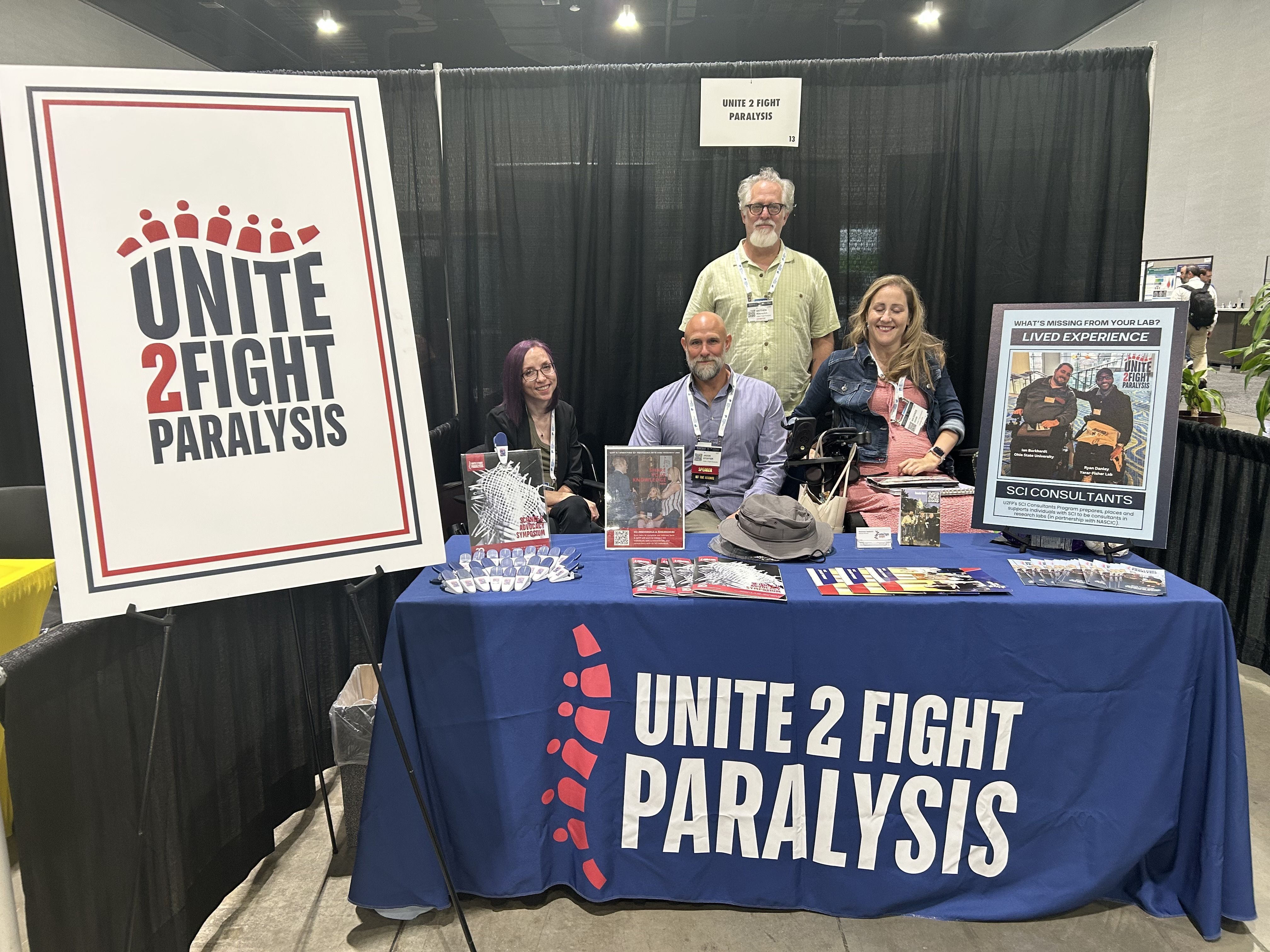
The U2FP ‘therapy’ booth at NNS was in good hands with Samantha Troyer (left) and Mackenzie Wann (right). They helped Matthew and I (center) keep the conversations going and the SCI Consultant demand high.
After my talk, our U2FP exhibit booth became something like a therapy room for researchers who have experienced the obstacles I highlighted in my talk. Many young researchers said, “I just want my work to make a difference for someone.”
This was a necessary pulse check. Much of what I said is not news to these folks, but for them, knowing that someone is trying to do something about it was encouraging. Hearing all of this constructive feedback means that our efforts and direction are critically important. We have to continue to believe that science is a necessary tool to improve our quality of life
Maybe someday, the 19,000 people who suffer SCIs every year won’t have to hear what I heard as I emerged from my trauma: a message of loss and finality.
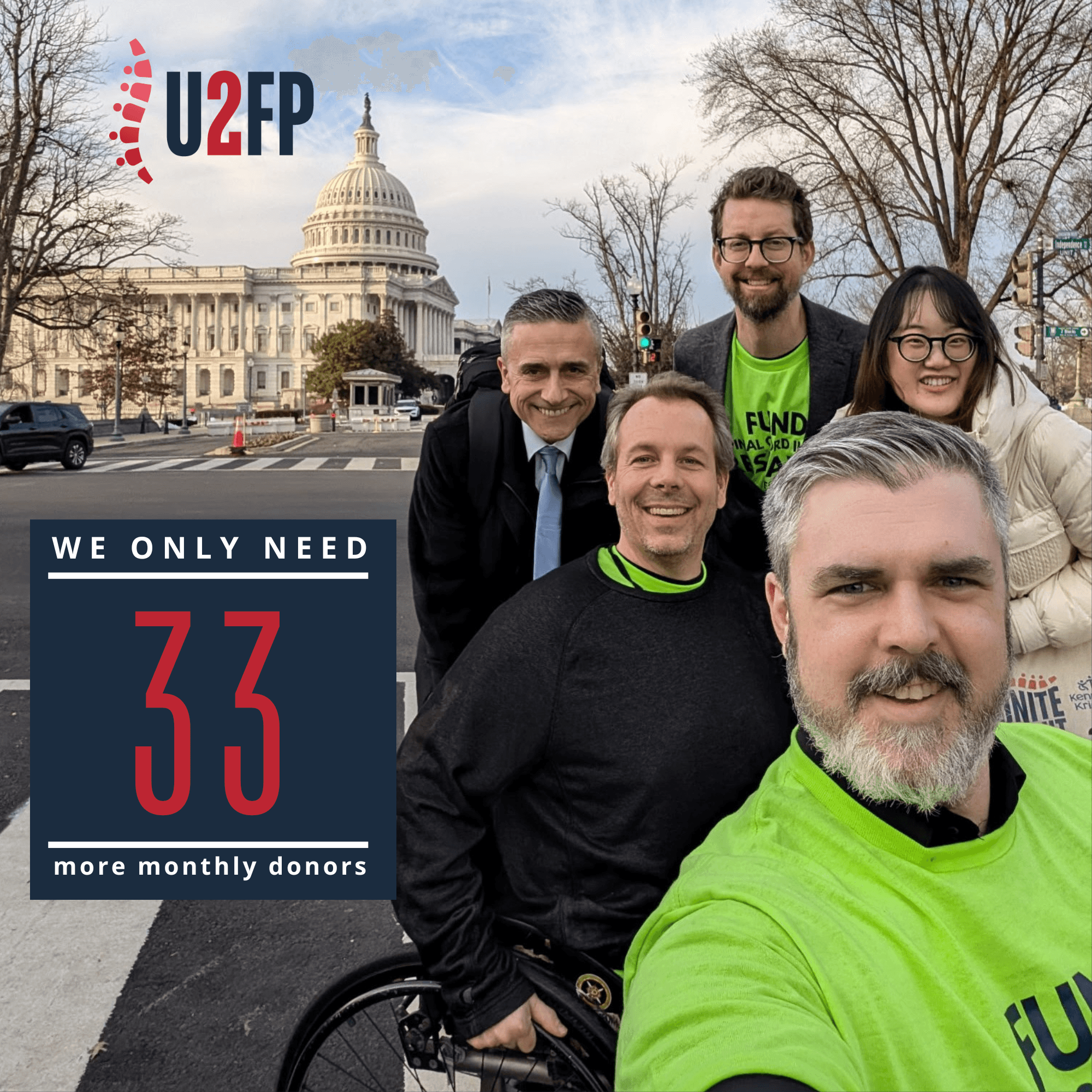
PS - July is Disability Pride Month and U2FP is a small, grassroots organization that consistently punches above its weight, leveraging big wins for the SCI community despite a small budget. Earlier this year we helped restore $33M in federal SCI research money after it had been eliminated in 2025. Consider becoming a monthly donor to U2FP and help us add 33 new monthly donors in honor of the $33M we helped restore to SCIRP. You can read my colleague Quinn Brett’s message (Disability Pride Month & U2FP) for more details. The bottom line is this work doesn’t stop and we need your ongoing support to continue making gains for functional recovery.