November 16, 2026
Headline Patrol: NervGen Gets FDA Breakthrough Designation, Doses First RESTORE Participant
Sam Maddox
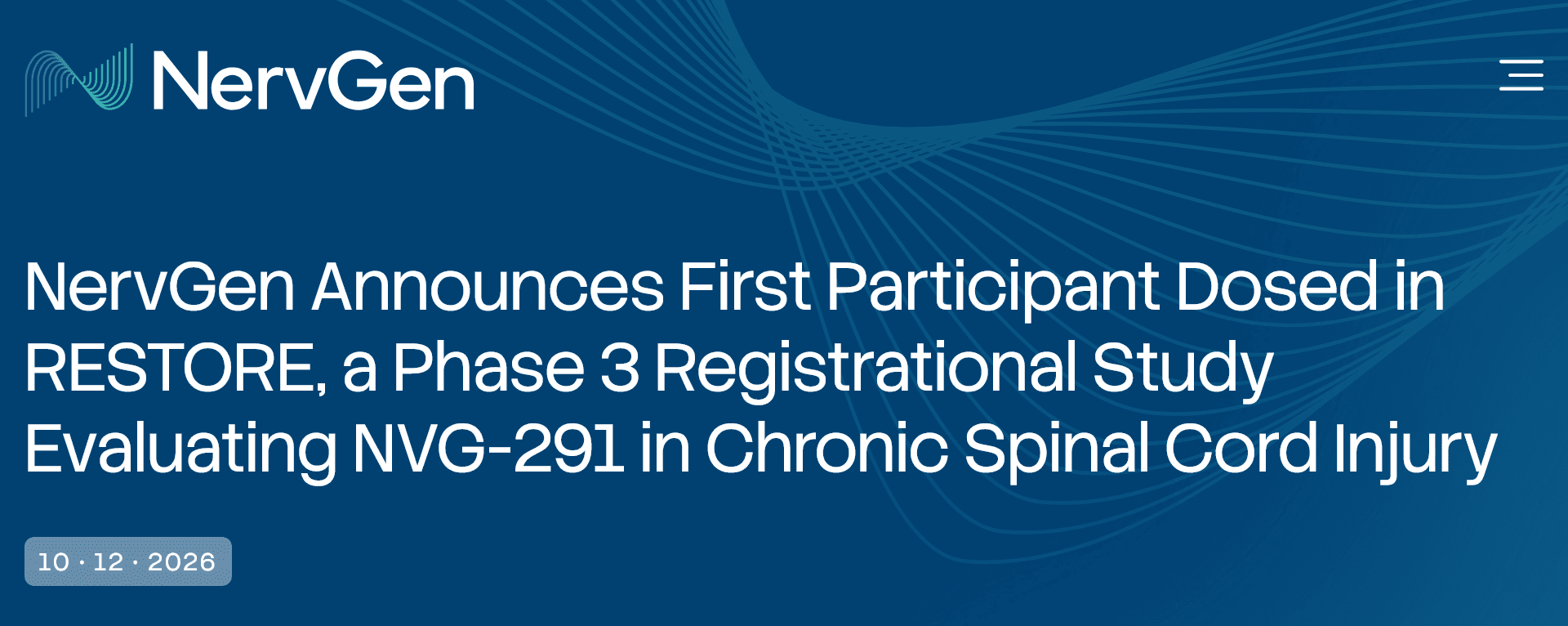
Here is news we don’t get to report very often: a potential treatment for chronic SCI has begun a 150-patient, multicenter Phase III clinical trial (RESTORE). Meeting the goal in this phase (likely not known until 2028) means the drug can get approved to go on the market.
This just in: NVG-291 has just been designated as a Breakthrough Therapy by the FDA. This opens communication channels between the company and the regulators, smooths the approval pathway for NervGen and affirms the agency’s faith in the drug’s potential.
I asked NervGen CEO Adam Rogers about this: ”Breakthrough is a very big deal, validating for the science, NVG-291, and the CONNECT study [earlier 1a/2b trial] results.”
Moving to Phase III
RESTORE is the latest chapter in NervGen’s NVG-291 story, which we have followed closely since this peptide was a twinkle in the eye of the late SCI researcher, Jerry Silver, years before NervGen formed.
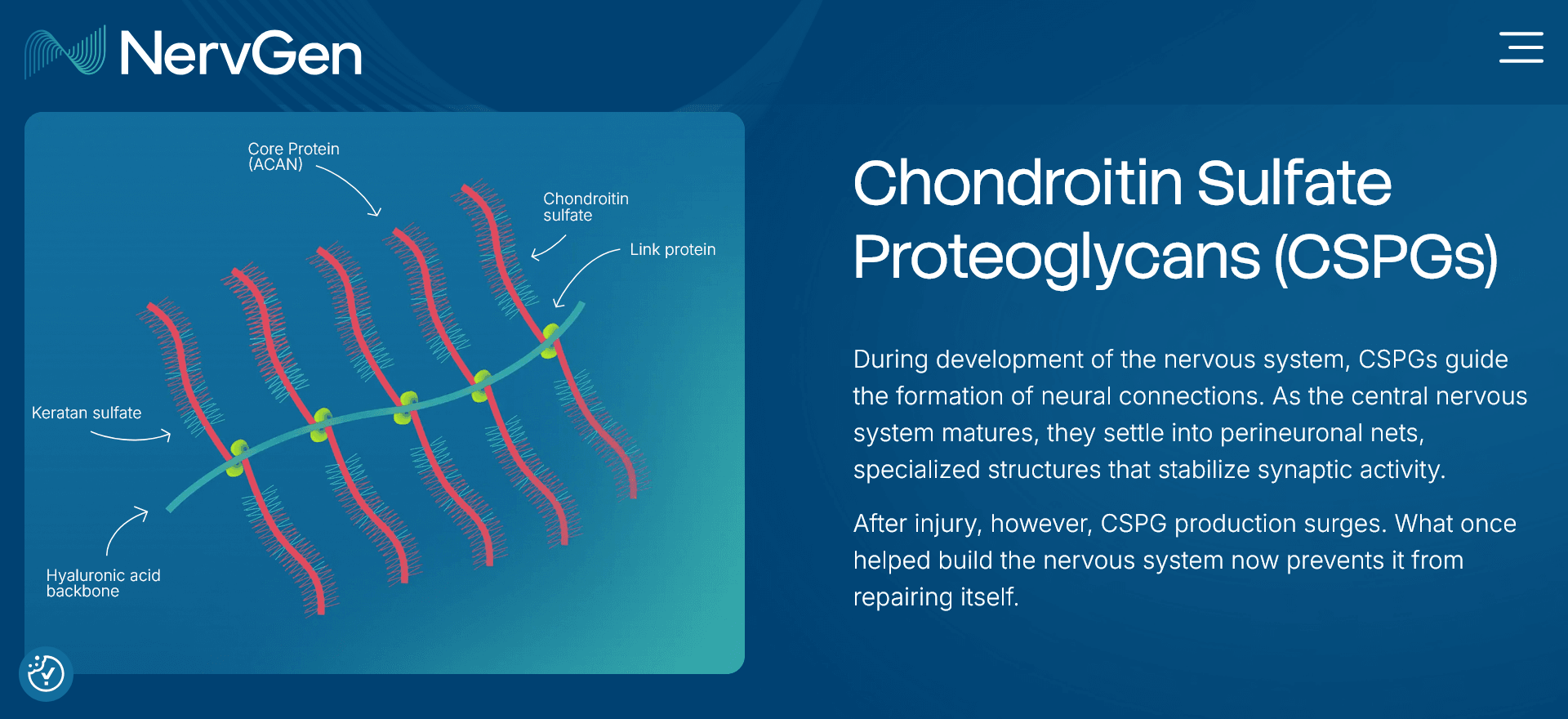
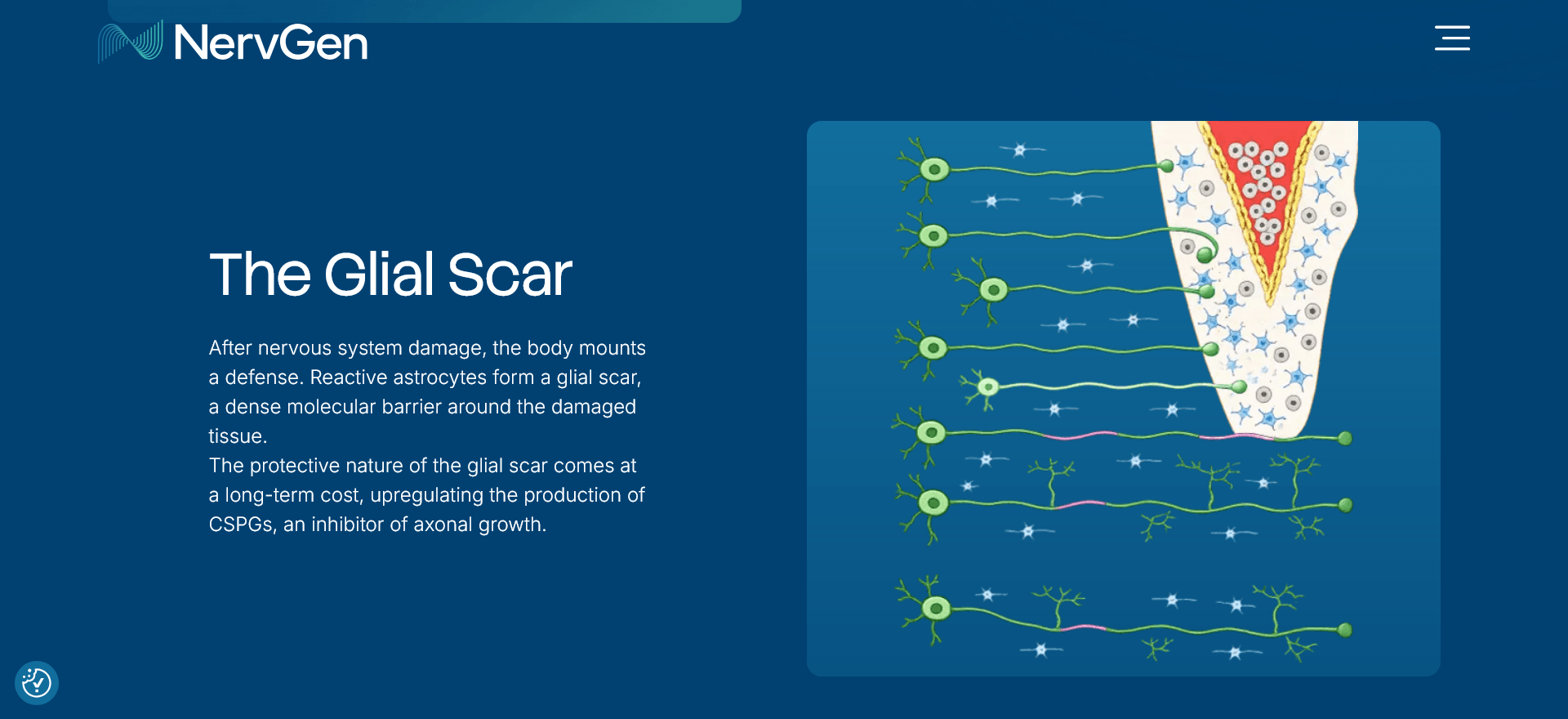
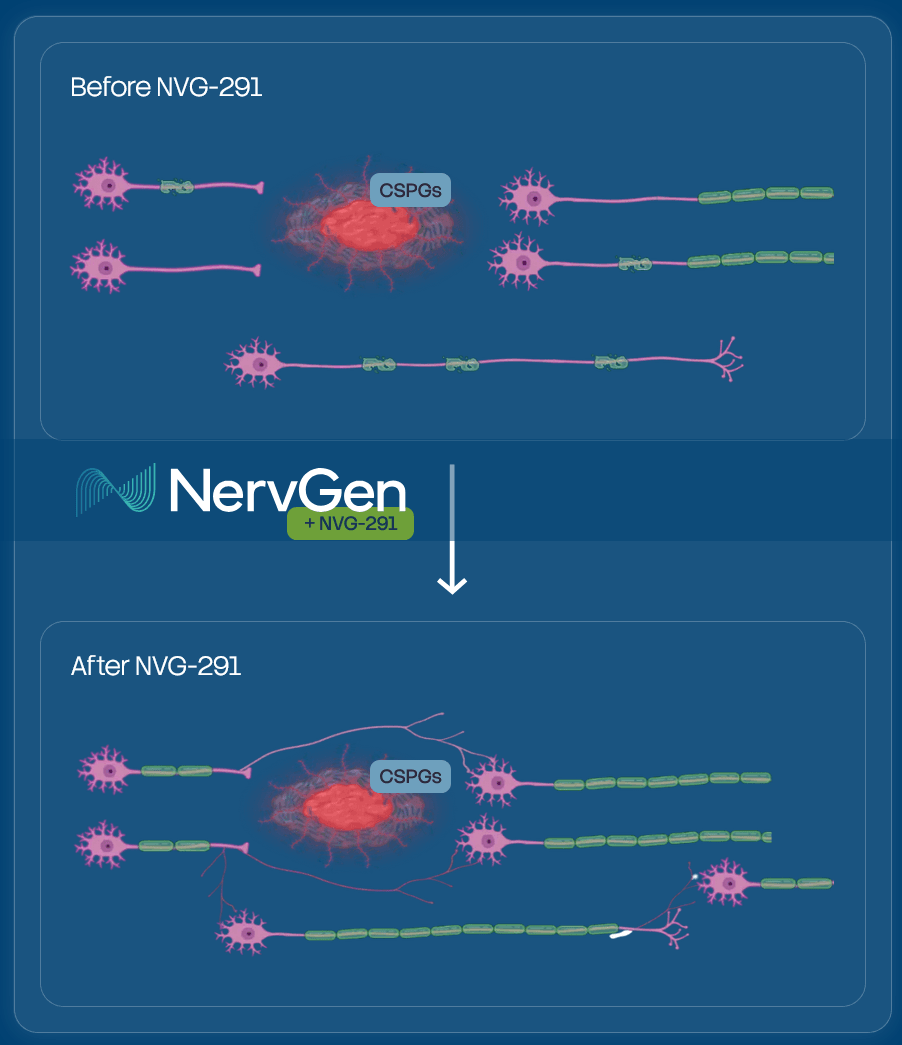
How it works: The hypothesis underpinning NVG-291 is that SCI causes a scar to form at the lesion site, releasing sticky molecules called chondroitin sulfate proteoglycans (CSPGs). Silver and others found that CSPGs bind to a specific receptor on the surface of nerve fibers (axons); this in turn activates a chemical signal that tells growing axons to stop. NVG-291 is a peptide that targets the inhibitory signals, effectively removing the brakes on the body's innate capacity for regeneration. NervGen presents this visually here.
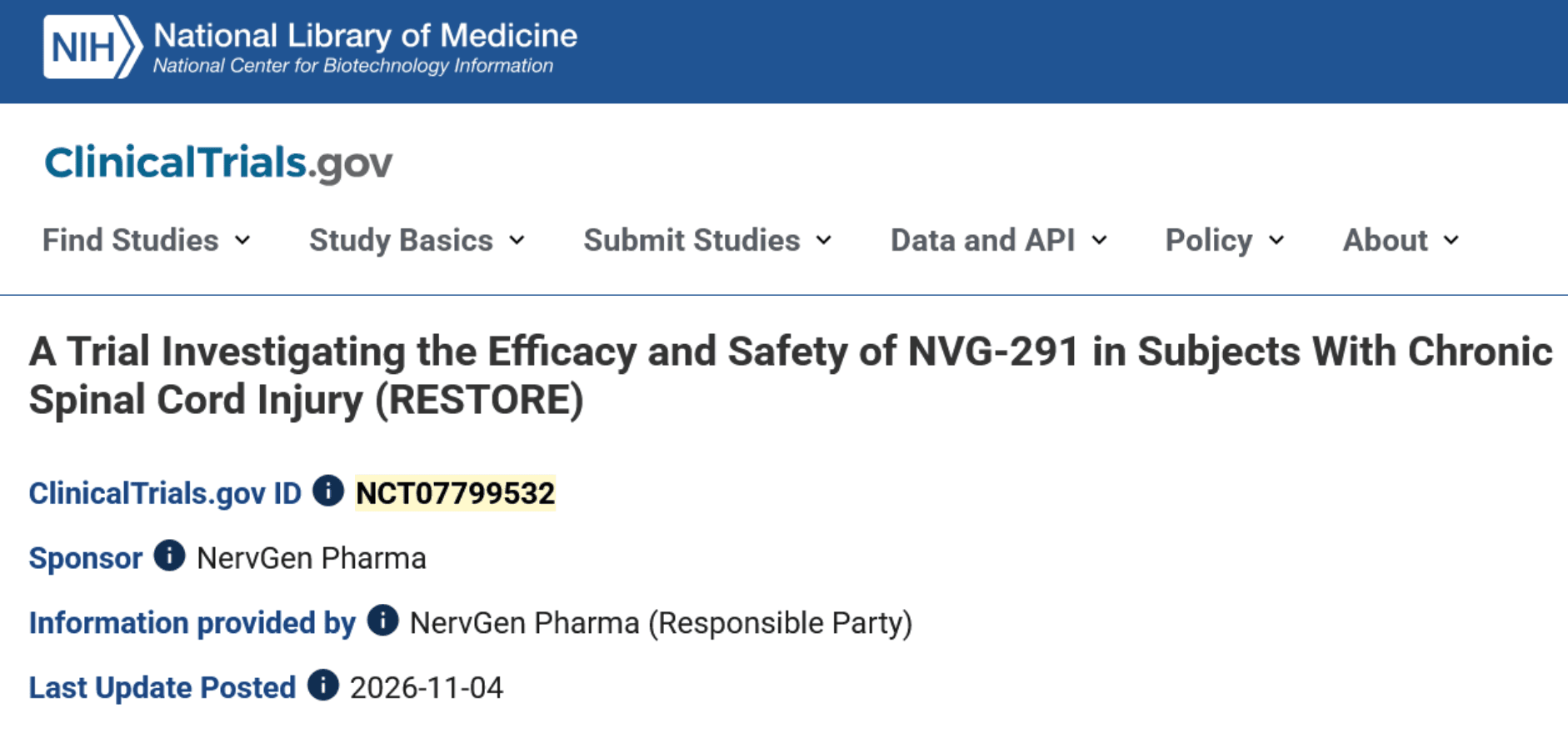
Here is the clinical trial detail. At the time of this writing, recruitment is active at four of 23 trial sites across the U.S. and Canada. Participants with chronic, cervical, incomplete SCI will be randomized to receive either NVG-291 or the placebo via a daily subcutaneous injection for 12 weeks. This will be followed by four-weeks of observation.
Having multiple sites is a huge advantage for recruitment. The earlier trial required participants to move to Chicago for more than four months. NervGen has spread the trial sites across the U.S. with the intent that participants won’t be more than a couple of hours away from home.
Chicago racers and supporters gathered for a rooftop party after the race on October 11th.
Primary Endpoint
NervGen hopes to show that its peptide compound can improve hand function and quality of life in individuals living with chronic cervical motor-incomplete injuries.
The Phase III study is based on findings from the placebo-controlled Phase 1b/2a CONNECT SCI trial (enrolled 20 chronic cervical incompletes, ten got the drug, ten got placebo). That study, done entirely at Shirley Ryan in Chicago, measured electrophysiological signals (motor evoked potential – MEP) for each participant, and included daily physical therapy.
Again, here’s Adam Rogers, NervGen’s CEO:
We observed a statistically significant increase in hand MEP amplitude compared with placebo (p=0.0155), consistent with improved corticospinal signaling. The corticospinal tract plays an important role in voluntary movement, particularly fine motor control of the hand.
In 2025, NervGen reported a mean functional improvement at week 12, scoring +3.7 points on GRASSP, a proprietary assessment instrument that quantifies upper limb strength, sensation and prehension.
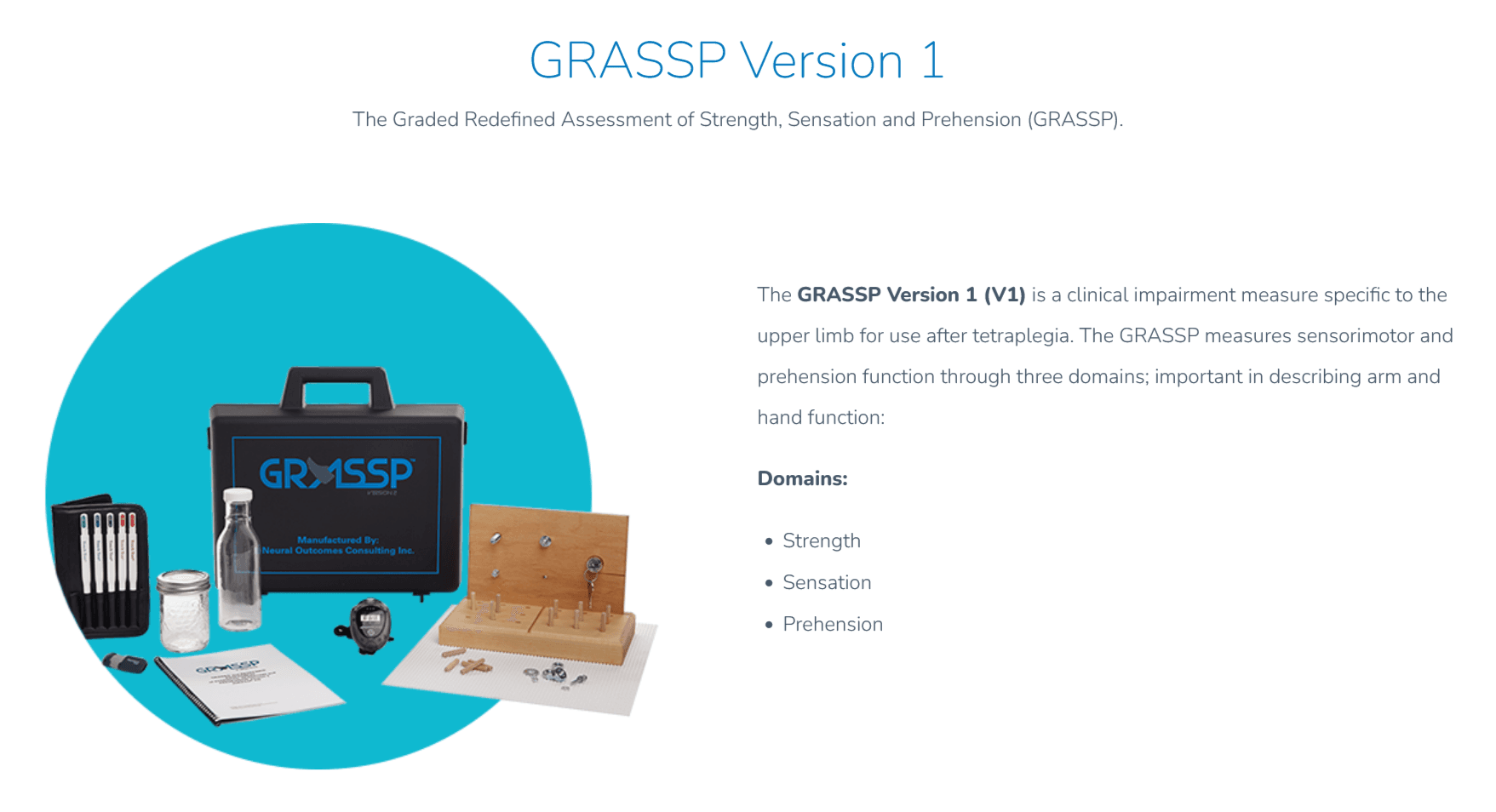
This nearly 4 point improvement is considered statistically significant. Moreover, the GRASSP scores continued to rise at week 16, a month after the treatment ended. Six NVG-291-treated participants later reported being “much” or “very much” improved compared to three in the placebo group. After a year, 67 percent (6/9) of drug-treated subjects reported improved bladder control and 56 percent (5/9) reported reduced muscle spasticity.
Rogers said the Phase III trial will again use GRASSP to assess functional prehension across four standardized tasks per hand. GRASSP is scored by a trained and certified physician who is blinded to whether the participant got drug or placebo. “The primary efficacy analysis compares the change from baseline to Week 12 between the NVG-291 and placebo groups,” he said.
Rogers said the FDA also discussed the importance of supporting GRASSP data with participant and clinician perspectives. Therefore, clinicians and patients will take semi-structured, blinded qualitative interviews capturing participants’ lived experience.
Unlike the first smaller trial, the new one won’t measure electrical activity, nor will it include any physical therapy (PT) component.
Why no PT? Cost savings? While it’s true that offering daily PT to 150 quads for three months is expensive, that’s not the case here.
Rogers told me NervGen’s first pitch to the FDA for a pivotal Phase III trial included PT. They were talked out of it. “The FDA was very resolute to us that adding physical therapy was not a good idea. They felt strongly that inclusion of a prescribed PT routine would add an additional variable to the study. They did not think that we could replicate the PT routine from site to site.”
Rogers said they ended up asking each trial participant to continue whatever level of physical activity they had before enrollment. However, participants will be given exit interviews to describe their physical activity during the trial.
Regarding electrophysiology testing, Rogers said regulators guided the company toward getting the GRASSP data and did not recommend testing for MEP signal. “FDA raised concerns about achieving and maintaining consistency in a multicenter Phase III study and the potential for variability between sites to complicate the interpretation of electrophysiological results,” said Rogers.
The goal, per Rogers, is to “fundamentally change the outlook for recovery and open a new world of possibilities for people living with spinal cord injury.”
Rogers continued:
Our goal is to generate the highest-quality data package possible to evaluate NVG-291’s safety and efficacy. Should the safety and efficacy findings support it, we intend to use that evidence to support a marketing application, with the aim of bringing a potential first pharmacologic treatment for individuals living with chronic traumatic cervical motor incomplete SCI to promote recovery of lost neurologic function.
Once the company completes trial enrollment it will break the blinding and sort out data including who got the drug vs. who got the placebo. They'll know if the trial met its primary endpoint – improved GRASSP scores, indicating drug effect on hand function.
If it goes as hoped, getting top-line results in early 2028, NervGen will submit a New Drug Application for FDA review. Regulators often take 6 to 10 months to evaluate new drugs, and how companies are set up to manufacture them. Because NVG-291 has been designated a Breakthrough Therapy, the process may be fast tracked.
And if the FDA likes it? NervGen can take the drug to the marketplace so clinicians can prescribe it.
NVG-291 will also need a real name – both generic and brand. Rogers said the FDA has to approve the names, which have been submitted.
The finish line is still ahead. The next step is to work with insurers to get the drug paid for.