Apr 7, 2026
Pain
Quinn Brett
I grew up in humid and mosquito-laden Minnesota. During the summers of my youth, I remember my neighbor turning on this blue glowing bug zapper in his backyard. As I lay in bed at night the sound of its constant electric hum was interrupted with an occasional <zap> or <zap-sizzle-zap> filling the space as I fell asleep.
Many of you surely remember those bug zappers, even if they aren’t quite as popular anymore. I was barely conscious of them at the time. Unfortunately, after my injury they became an apt, visceral metaphor for the kind of pain I experience on a regular basis.
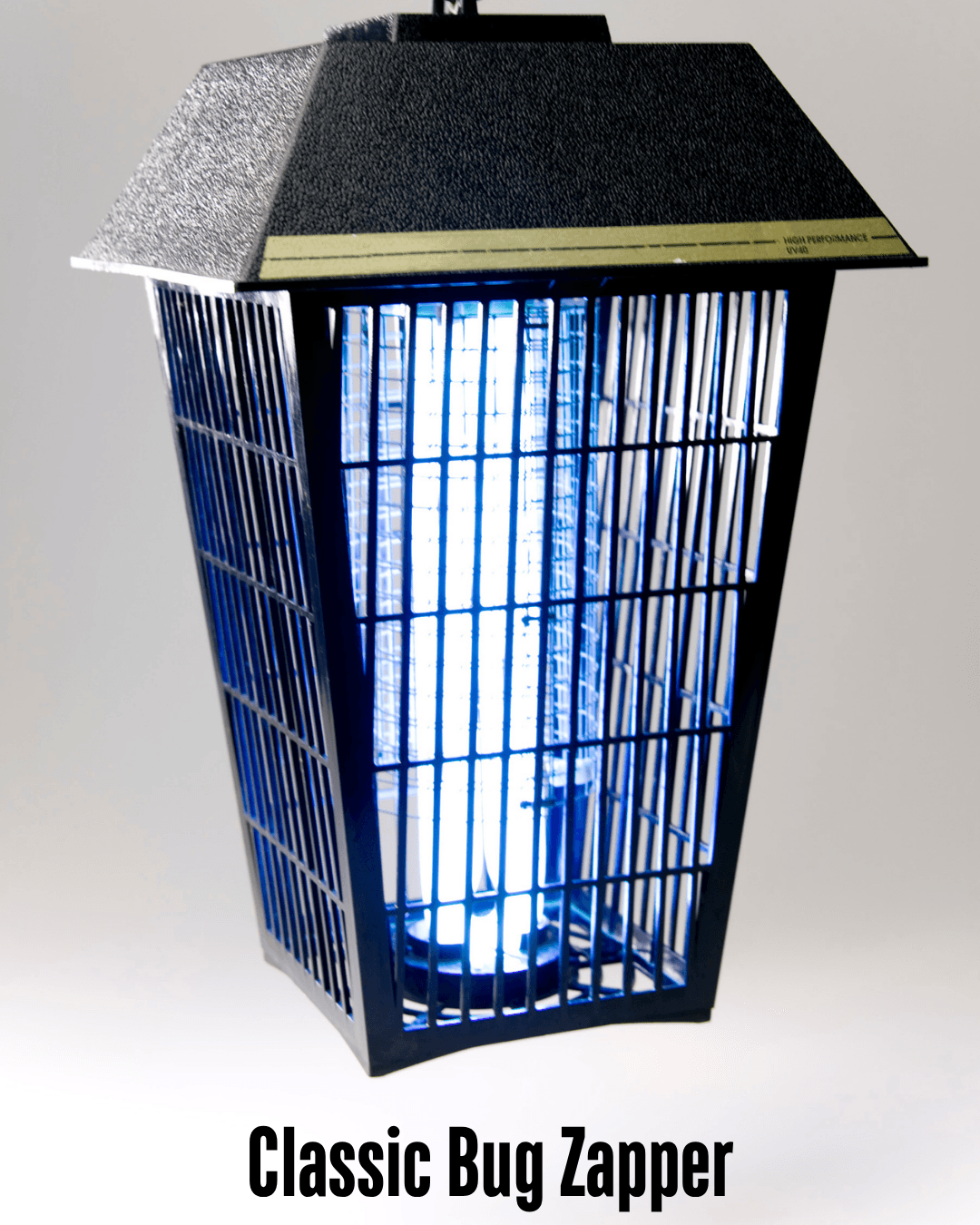
This — this constant, maddening, relentless buzz is what my lower half feels like all day, every day. If you've ever had sciatica — that hot, shooting nerve fire that radiates down your leg — imagine that, but it never stops, never gives you a break, and covers your entire lower body. Now add the occasional electric shock on top of it. That's the neighborhood I live in.
This pain happens regardless of what I do: whether I am trying to sleep, handcycle across the country, or smiling on stage delivering a presentation. This background buzz has been running, without pause, for almost nine years. At times, my attention is thin — both because of the raw, searing sensation itself, but also because it quietly erodes the quality of my sleep, night after night.
I even get the zaps, like those Minnesota mosquitoes — "zingers" or "lightning bolts" as I like to call them. These are an extra poke and jab of pain on top of the constant fiery tingle. While they are short-lived — usually less than 30 seconds — they come out of nowhere and can be excruciating. Sometimes they are so bad they bring me to tears.
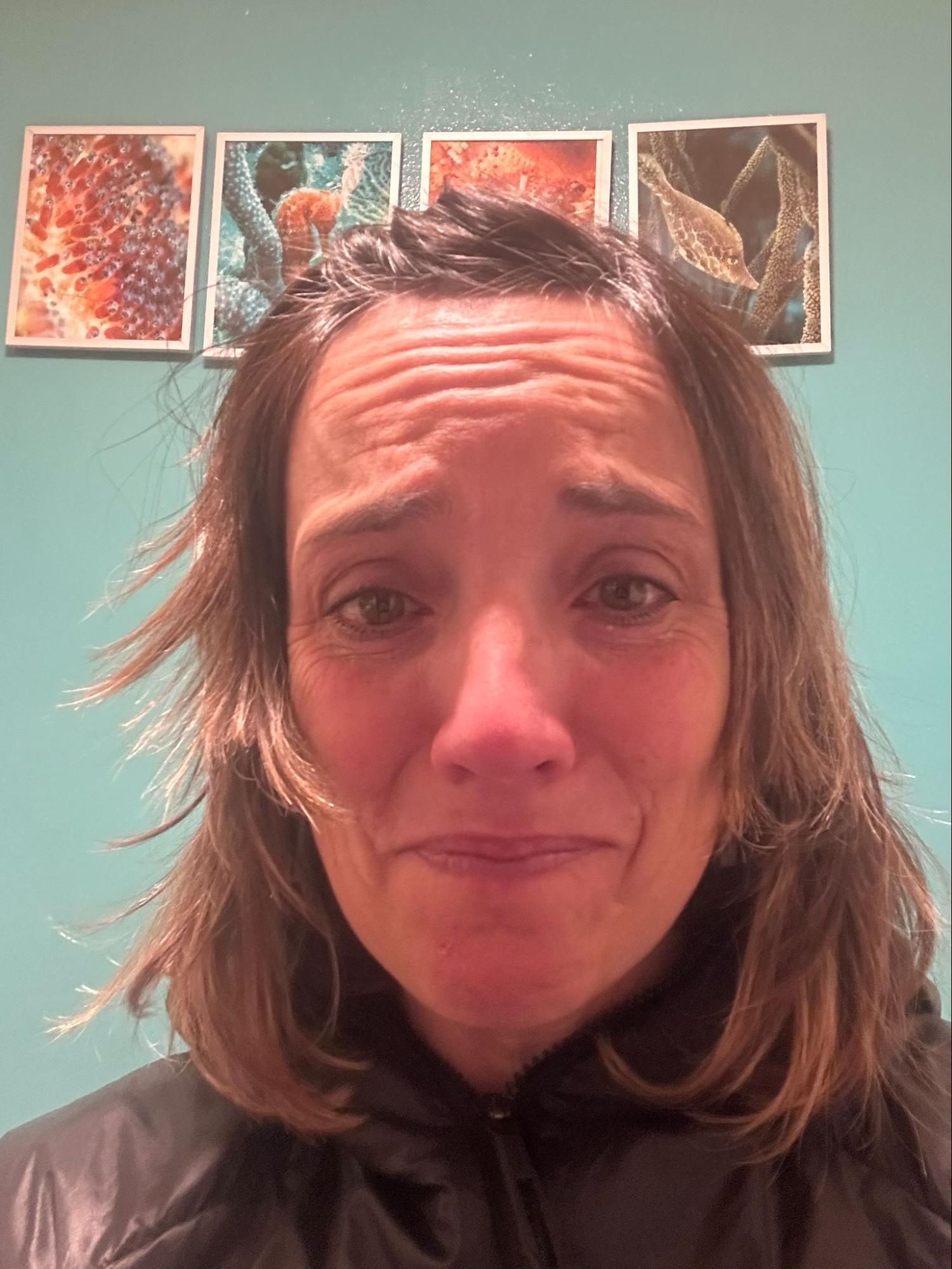
One version of my face as I’m trying to distract myself from the “zaps” that shock above the hum of this nerve pain.
Nerve pain is interesting — and exhausting in ways that don't always show. I thought I knew pain before my injury – this is a whole other level.
What most people don't see is the performance happening behind my eyes. In a meeting, while I'm nodding and taking notes, part of my brain is quietly managing a fire. In a conversation, while I'm laughing at your joke, I'm also breathing through a zinger nobody can see. It takes a surprising amount of mental energy to appear fine — to keep your face neutral, your voice steady, your focus on the person in front of you — when your nervous system is swarming with mosquitoes inside.
There's a strange duality to invisible pain. Because people can't see it, they don't always register it as real, or serious. Nerve pain isn't something that shows up on your face the way a broken arm shows up in a cast. So it gets overlooked — even sometimes in conversations about spinal cord injury — as if pain that hides is pain that doesn't count.
But it counts. It is always there for some of us. Like having a big blue humming and crackling lantern-shaped thing in your lap, with swarming bugs all day, every day.
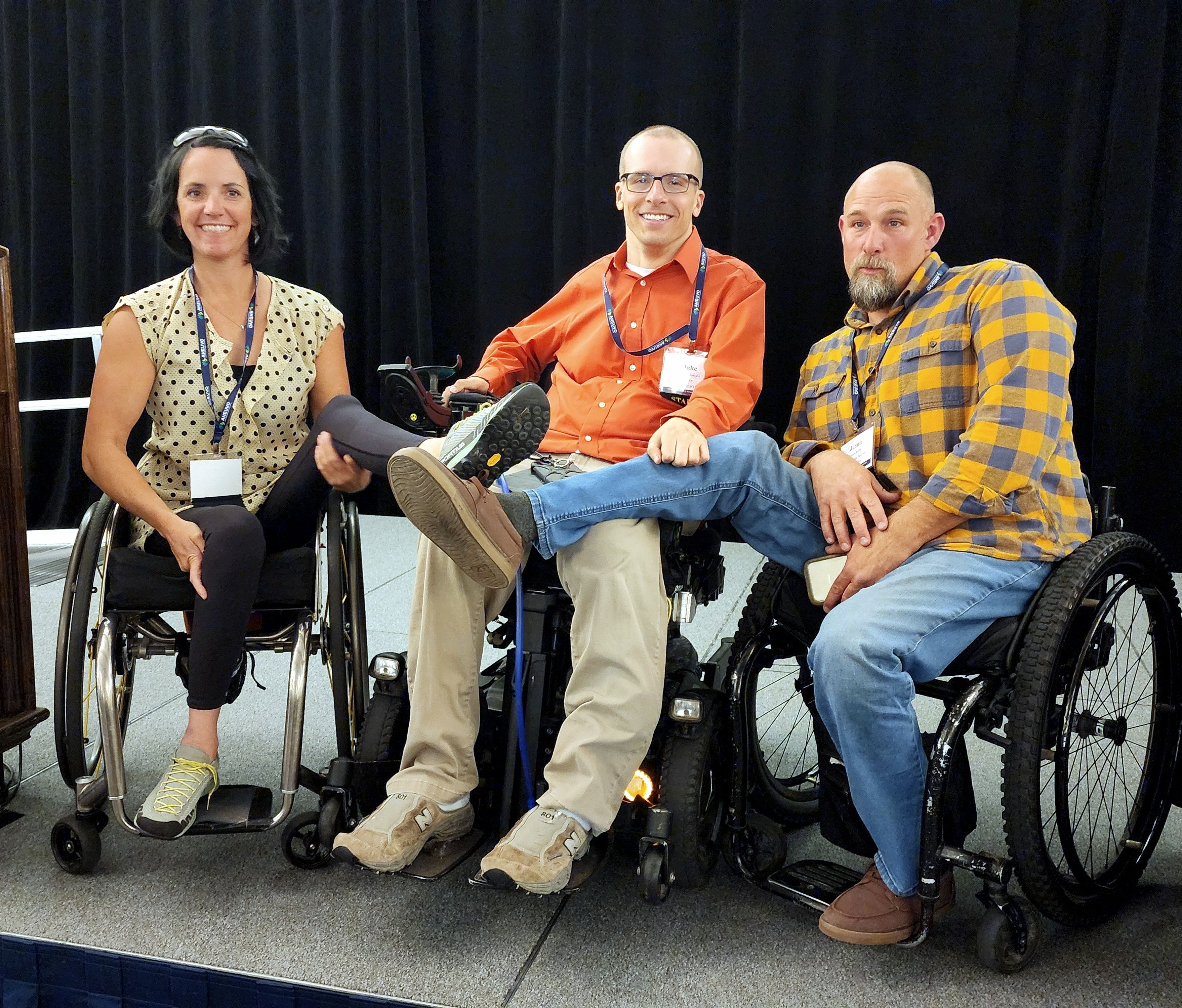
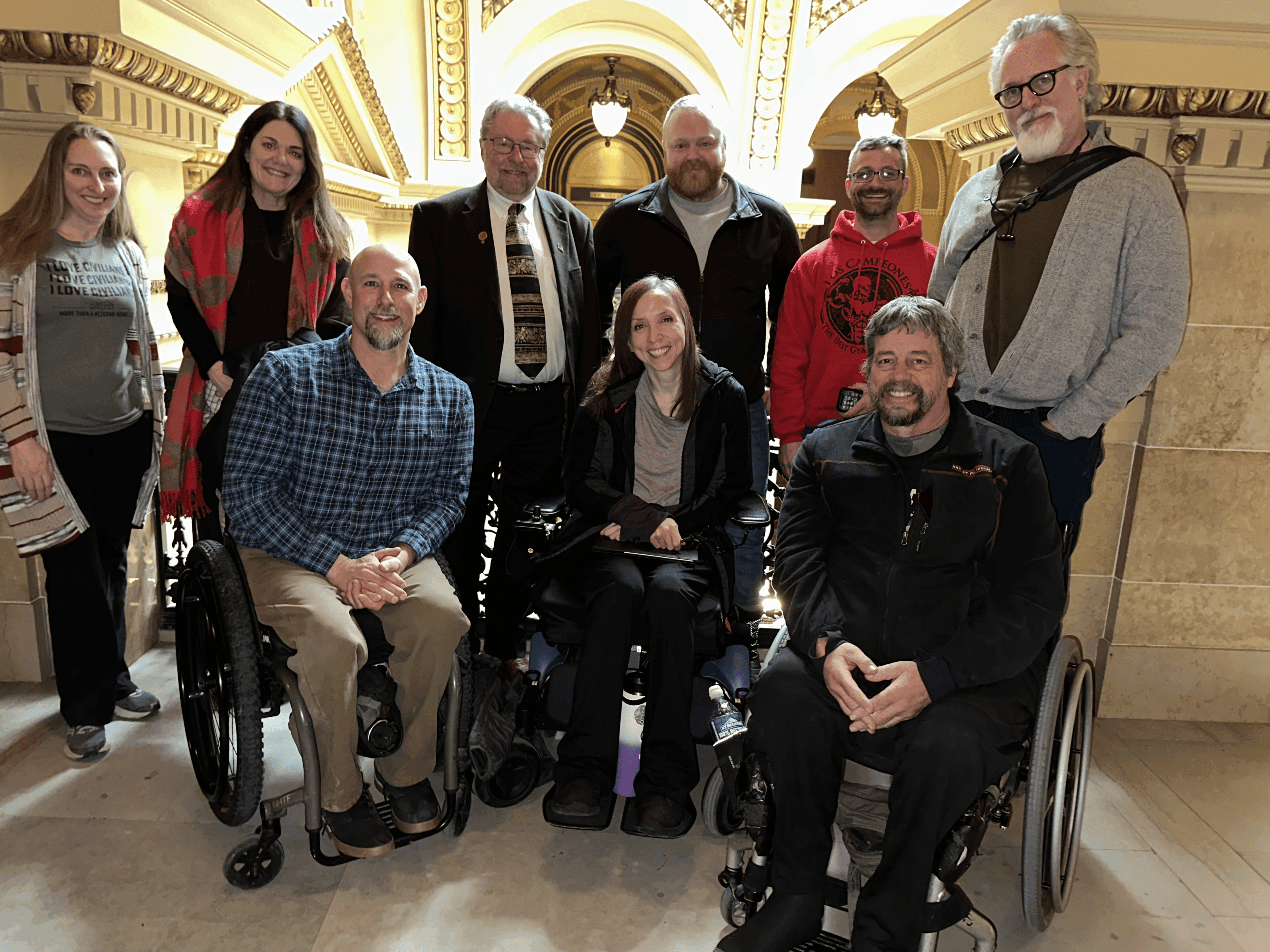
From left: me, Jake Beckstrom and Jason Stoffer - great colleagues of mine at U2FP!
This is why I work for U2FP - because folks like me with an injury (or the parents and caregivers of someone with an injury) run this organization. They understand how important finding treatments for my nerve pain would be for my quality of life. I think it is critical that we as people living with this injury are active participants in this work, fostering and shepherding solid science wherever we can so that the best strategies can benefit us.
No one is more motivated than people like me to find treatments for SCI. I deserve to be at the decision-making table where functional recovery treatments are being formulated.
The challenge of SCI is how different every injury is. Which means that while I experience severe nerve pain often, other folks with an SCI don’t necessarily experience it the same way I do. As my colleague Jason says - “every injured person is a snowflake!” - none of us are injured in the same way nor do we experience the same deficits. Which is why SCI is really complicated and hard to treat and heal from. And that’s why we need you!
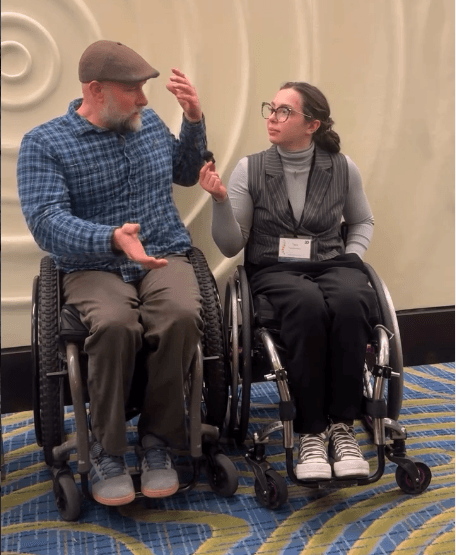
Jason Stoffer explaining to Tara Shetterly at our Symposium this past February how the SCI community is a heterogeneous population - snowflakes! Check out the whole cool, compelling reel that @tara_shett made about SCI!
This is why I want folks to come participate in our 2nd Annual Gala & Silent Auction at the Bird’s Nest Cafe in Estes Park, Colorado. My friend Melissa has graciously donated her space again this year for the event and my climbing buddy Cedar Wright will be giving remarks (more about Cedar’s experience with SCI soon). There will be great food, good beer donated by Lumpy Ridge Brewing along with wine and spirits and great conversation.
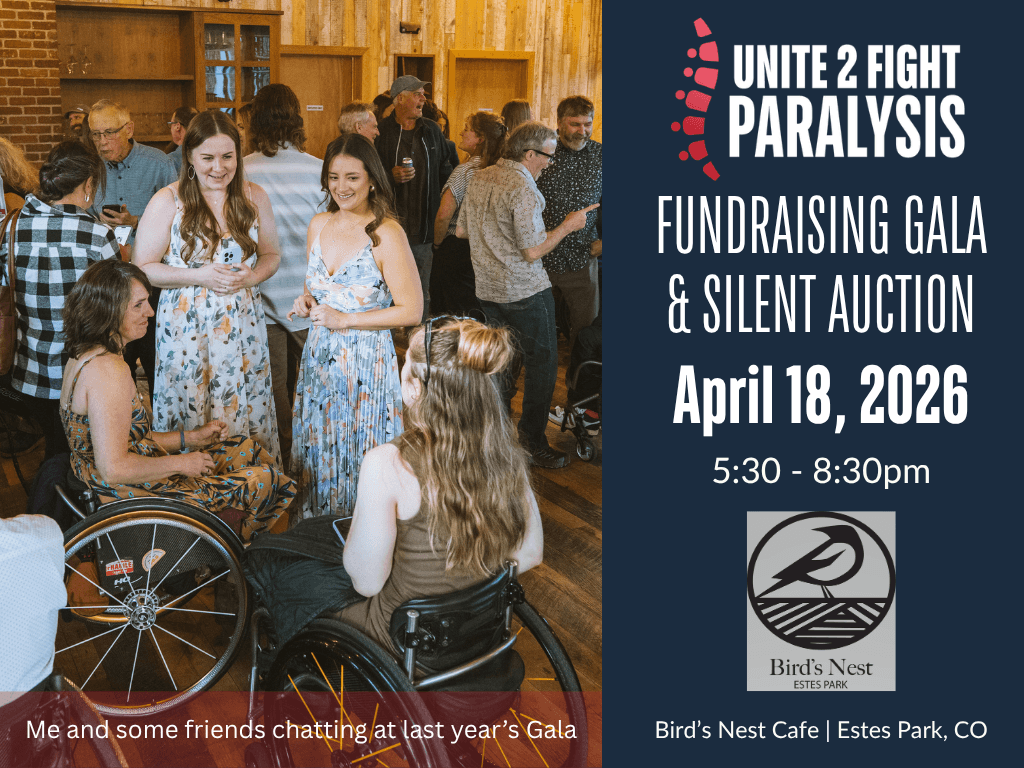
And if you can’t make the event, don’t worry! The Silent Auction is completely online and you can participate from anywhere in the world. Tickets for the silent auction are free (just select the "Virtual Auction ONLY" option at checkout) and you’ll have a chance to bid on vacation homes (all accessible), art, jewelry, outdoor adventures, and other great stuff. Check out all the items up for auction here.
Somewhere in Minnesota right now, a bug zapper is humming away in someone's backyard, irritating one neighbor or maybe the whole neighborhood. Come hang out, bid on something beautiful, and help us turn down the volume for everyone.
Join us!
PS - our goal for this event is to raise $30,000. So please consider buying a ticket to join us in person, signing up for the silent auction remotely, or even just make a donation to the event - your support means so much to me!