October 29, 2026
Take Actions: Don't Let Medical Coding Kill a Recovery Option
Jason Stoffer
Recently, the folks at the medical device company, ANEUVO, alerted us to a critical barrier they are facing with their ExaStim unit (which will also affect similar units manufactured by ONWARD and SpineX): equitable reimbursement approval from the Center for Medicaid/Medicare Services (CMS). CMS sets limits on insurance reimbursement rates for insurers, assigning a medical code that is used for billing.
Most of you are aware that ONWARD Medical achieved the first FDA approval of an SCI-specific device addressing functional recovery - The ARC-EX - back in December 2024. This approval has paved the way for similar devices; namely, ANEUVO’s ExaStim and SpineX’s xStep units.
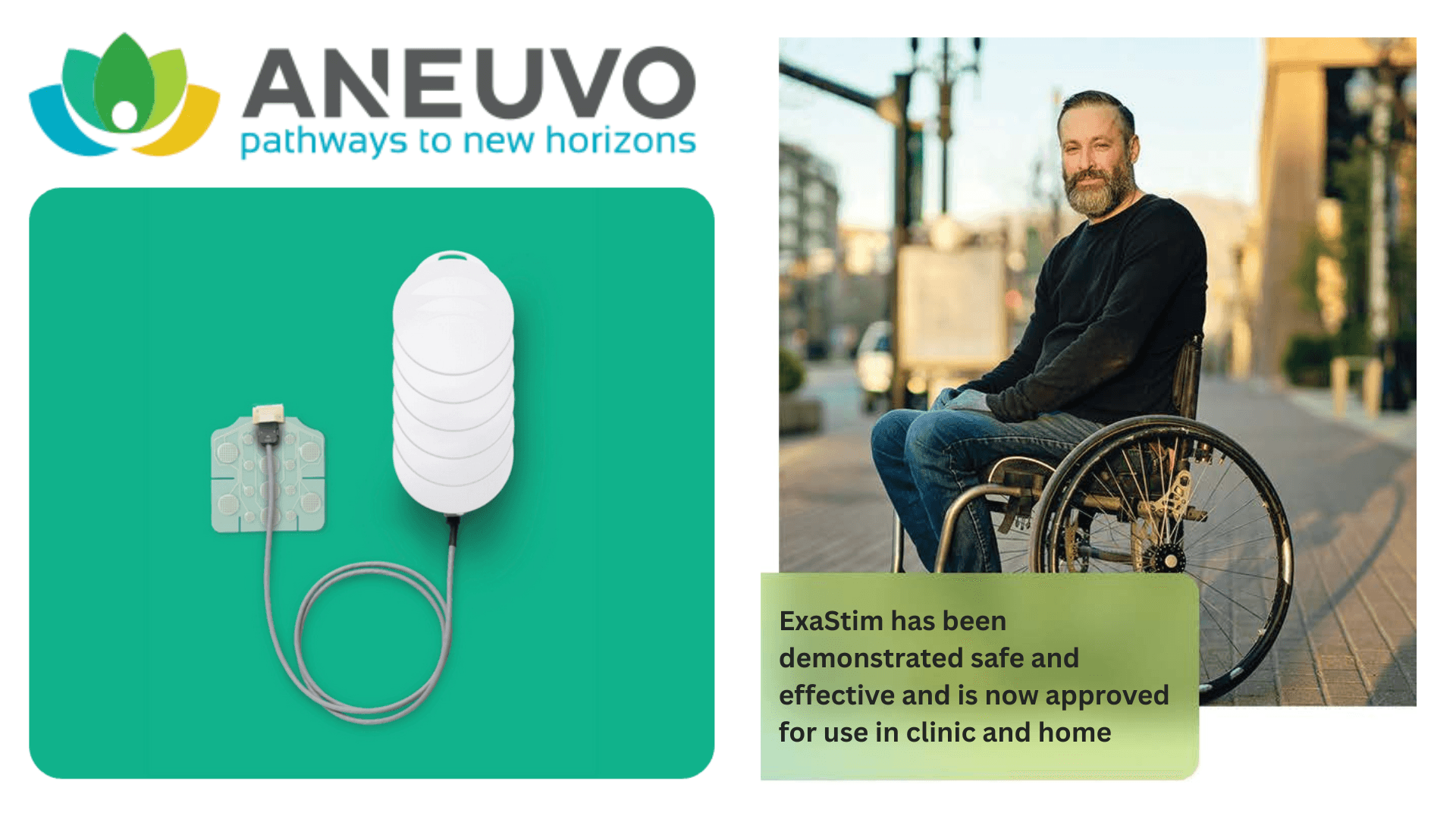
What’s the problem? Well, the ExaStim and other Transcutaneous Spinal Stimulation (TSS) devices LOOK very similar to another electrical stimulation device: The TENS (or Transcutaneous Electrical Nerve Stimulation). And there is already a billing code for TENS, (which carries a reimbursement of only $517). Right now, CMS’ preliminary decision is to drop TSS into the TENS code.
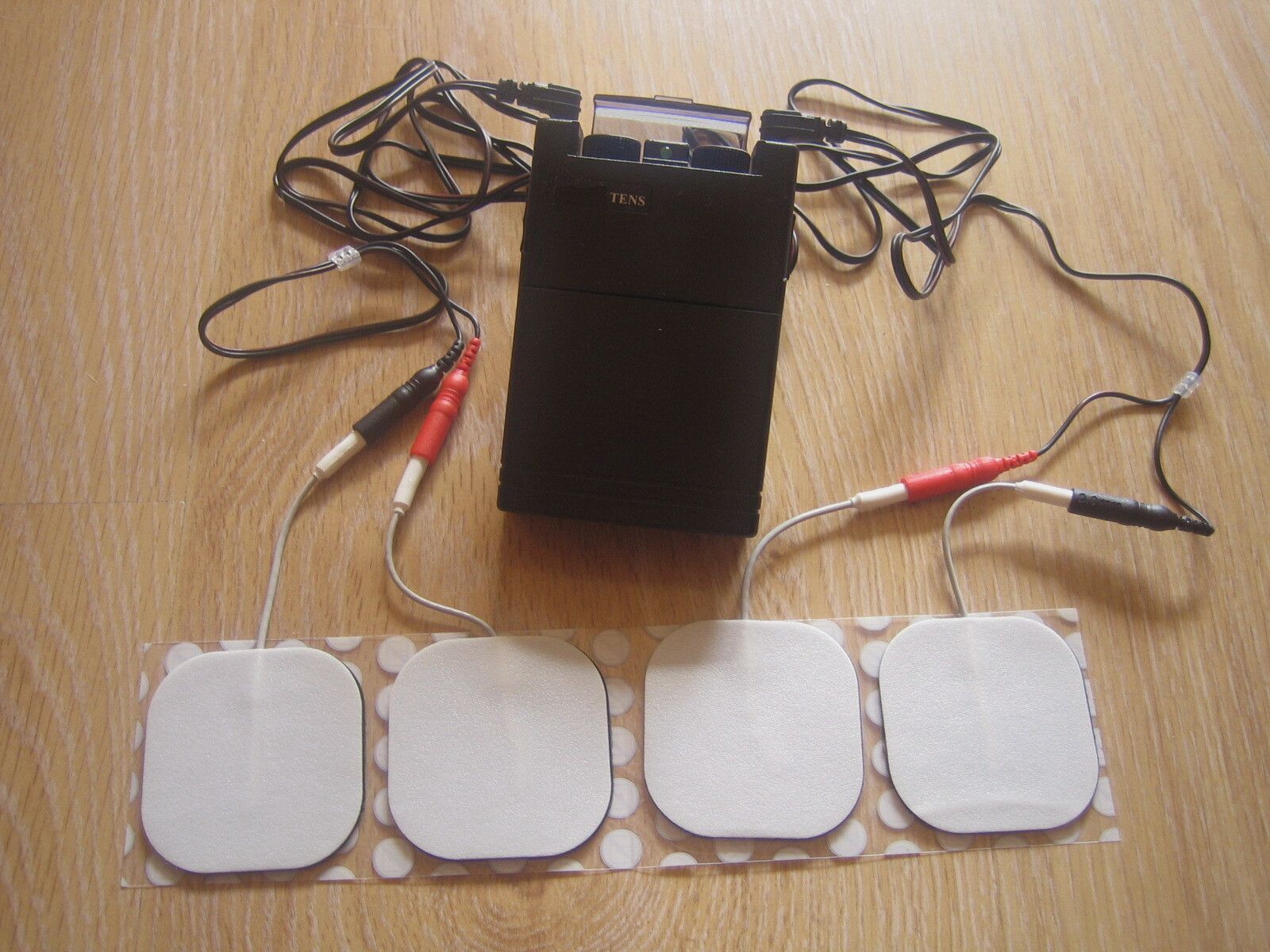
A TENS device (source: Wikipedia).
Though the devices look similar, they are not. While TENS looks like a TSS (box, wire, sticky pad), they are completely different animals. TENS is used for pain and acts on the nerves of the peripheral nervous system to “confuse” pain signals to the brain.
TSS is used on nerves in the central nervous system for improvements in motor and autonomic functions by “increasing the volume” of intention. A tetraplegic being able to use their hand for the first time since their spinal cord injury is VERY different from the 50 year old whose lower back hurts from playing basketball during open gym.
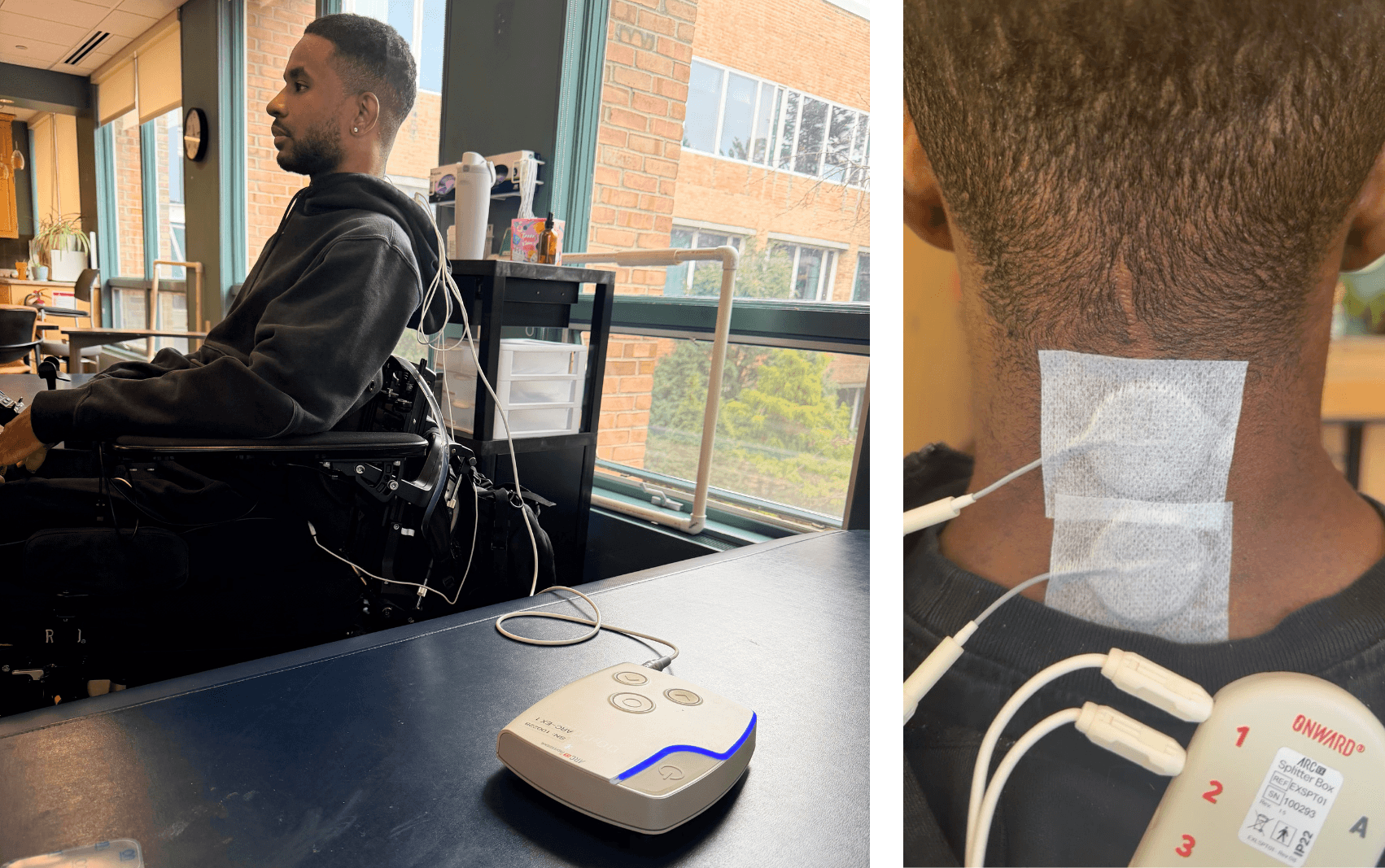
Pictured above is Jordan Bolton, U2FP’s Social Media Strategist, with ONWARD’s ARC-EX device earlier this year. The device was offered to Jordan as part of his Occupational Therapy sessions this past spring.
TSS devices are more costly to manufacture; if you bought one of them out of pocket right now it would cost thousands or tens of thousands of dollars. That cost reflects how much more advanced TSS devices are - due to their cutting edge technology - than TENS.
If we cannot get these devices reimbursed through our insurance, all that prior effort (which includes millions of dollars invested in research by taxpayers and foundations) for a “breakthrough” device will remain out of reach for home use. If TSS devices are only available to use at a clinic, it presents a significant barrier to many folks with SCI.
If this preliminary decision by CMS becomes permanent, it could kill the progress of TSS devices as current tools for rehab and recovery for our community. You can find a TENS unit on Amazon for $70. A TSS will cost thousands of dollars, so it is clear that TSS will need a new code or a different categorization for reimbursement.
Here's what can you do.
Email a comment to the CMS here: HCPCS@cms.hhs.gov before 5 pm EST on November 4th. In your email, make sure to state that you are writing in reference to the Second Biannual 2026 HCPCS public meeting, Agenda Item 3, covering the ExaStim and ReCure applications (HCP260630J3GVL and HCP260630X6V2R).
A strong, effective comment will run about one to two pages and follow this order:
- Explain who you are (PLEX, Clinician, Researcher, Industry, etc) Disclose any relationship with ANEUVO.
- Explain why this matters to the SCI community (eg hand function is a priority for tetraplegics; at-home therapies remove barriers to access; coverage is useless if supplies can’t be paid for; give personal examples of recovery if you’ve used a TSS unit).
- Make these three asks:
- Pay for the electrode array from the first month of use
- Give the electrode array its own per-array code
- Don’t treat TSS devices like a TENS pain device
- Then thank CMS in advance for creating a new TSS code and DME classification.
U2FP is fostering a movement to deliver real recovery outcomes for people living with spinal cord injury. Our advocacy and education work is vital because of how complex the translational pipeline is, particularly the health care system. There are so many hurdles that a promising intervention has to clear in order for it to succeed. As activists, we need to be committed to identifying and addressing the barriers that hinder research along its path from the “bench to the bedside”.
Raise your voice on this issue to ensure these treatments are reimbursed fairly so they can be as accessible as possible for our community.
Join us!