August 27, 2026
Radical Transparency
Jason Stoffer
“Why is U2FP always asking for money?” I often imagine this silent response from our followers whenever we send out any sort of donation appeal. Maybe you feel this way; maybe you don’t notice; or maybe you don’t care. But I feel it is our responsibility to you, our supporters, to be as transparent as possible about the context of our financial situation.
U2FP has always operated on a shoestring budget while attempting to accomplish audacious goals (several of our founders came very close to mortgaging their homes to fund the first symposium). That's because this is heart work, done out of necessity for our community and those we love. After all, the majority of our board and staff live with this injury, or are family members of an injured individual.
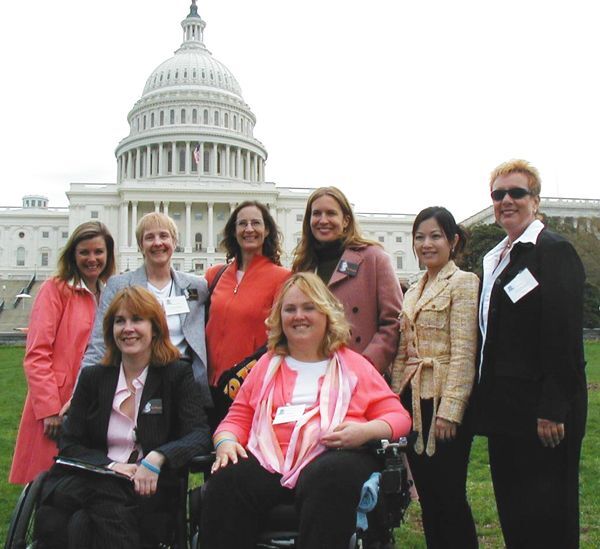
Organizers of the 2005 Rally for the SCI Community in Washington, D.C., which led to the formation of U2FP.
But as many of you know, this is also hard work. And what makes it particularly hard is that our efforts aim to change a complex process (the functional recovery research ecosystem), rather than deliver a digestible product or service (eg wheelchairs, curb-cuts, etc).
Before coming on as an employee with U2FP, I was a stranger to the non-profit world. I believed that if an organization existed, it was obviously getting its funding from somewhere. So why do I need to give my hard earned money? I believed that if the cause was important enough and the organization was doing productive work, there should be no issues with funding.
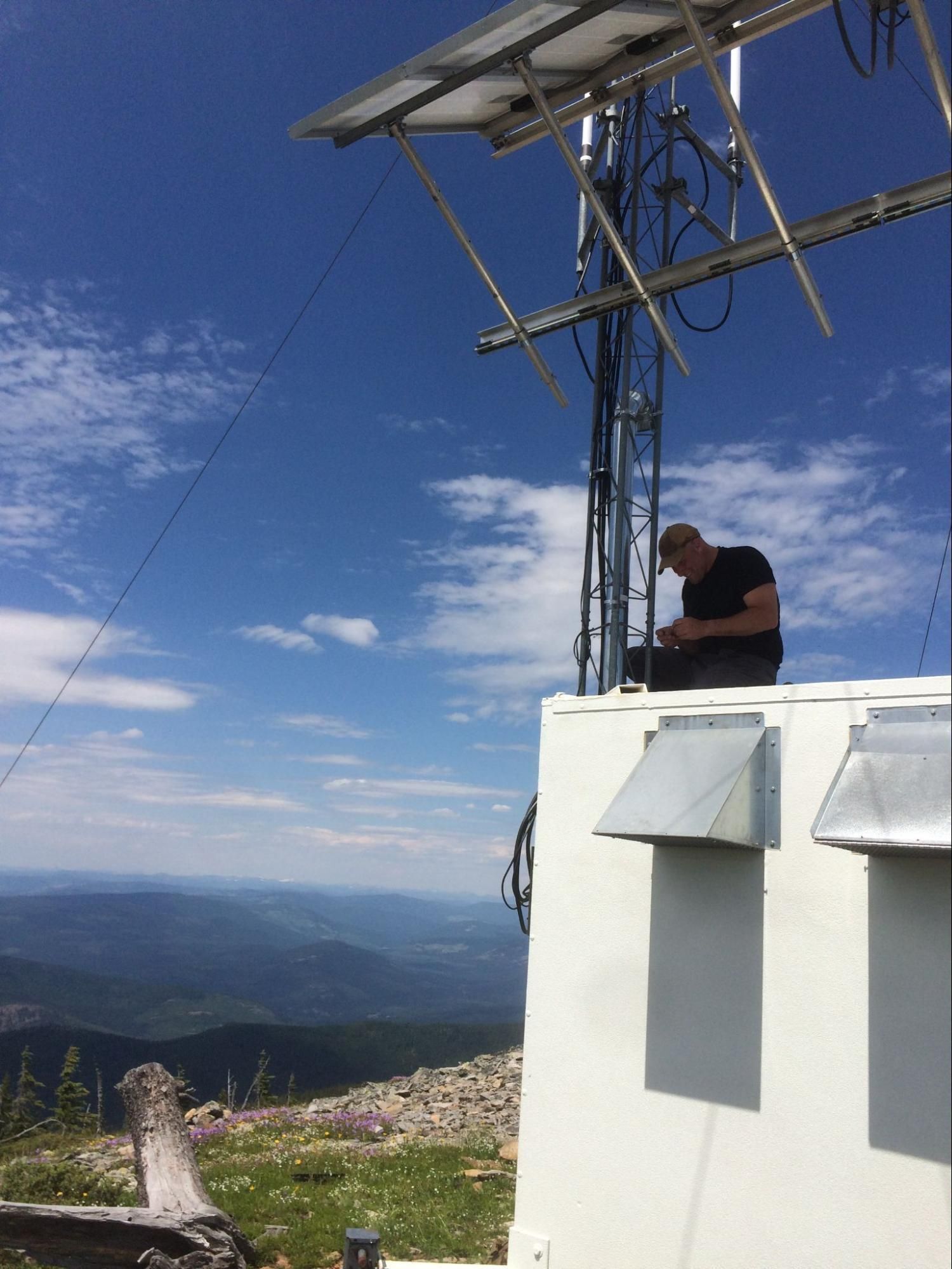
That's me up there, working out West, before my injury.
When I joined U2FP, I carried this “good work = strong funding” assumption with me. After all, I had witnessed the need for U2FP’s role in the SCI landscape during my first symposium in 2019. It was there that I asked a panel of researchers what seemed to be a logical question: “So what is the plan? What is the strategy?” The answer I got was a mix of speculation and awkward silence. That's when the reality set in - SCI stakeholders were not sufficiently incentivized toward a comprehensive plan with any urgency.
Meanwhile, I saw U2FP connecting the dots and helping stakeholders move toward some semblance of a collaborative strategy, while also welcoming everyone to the table. Better yet, they had allocated tens of millions of dollars to smart SCI research via their state legislative efforts - this was the best kind of work. Clearly, it would be well funded, right?
Unfortunately, as I learned when I got hired by U2FP, the truth is more complicated: our operating budget is a constant concern. People who ask or pay attention to our annual report often express incredulity: “How are you able to accomplish all you do with the small budget you have?” The answer to that question is an extension of what it’s like to live with SCI: when you are trapped inside this injury, you find a way. Because the status quo is unacceptable.
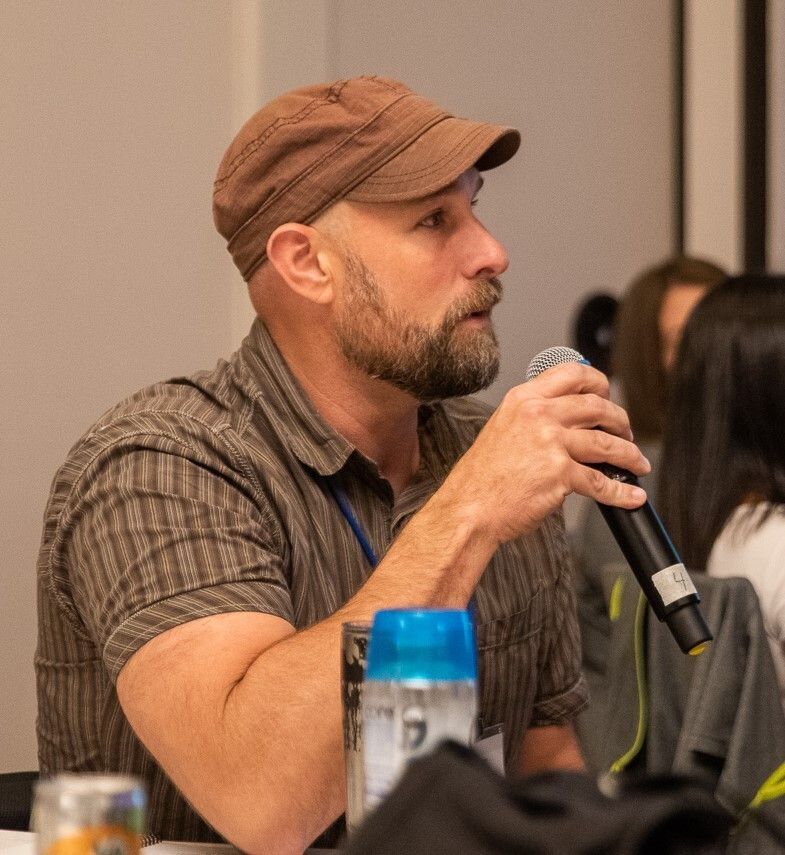
Me, asking that strategy question at U2FP’s Annual Symposium in Cleveland, two years after my injury.
Our Funding Paradigm
We are a donation based organization, with small supplementation from grants. Our grants are few and far between and they are obligated toward specific initiatives, not general operating costs (which is how most granting agencies work). The deeper irony is that an initiative-based grant actually increases our workload while salaries have to remain the same.
Historically, our annual symposium has done double duty in providing an educational community gathering while also helping to fund a chunk of our year-long operations. Unfortunately, cost hikes post-Covid have made the symposium a break-even or loss financial proposition.
Which is why we rely heavily on our community contributions through monthly and one-time donors, alongside auctions, concerts and race events. In all honesty, organizing those things throughout the year is not only exhausting but (and this is what riles me) takes us away from the advocacy, education and research support work that we want to be doing. We have a handful of individual, large donors that have saved our bacon over the years when the budget has dropped too far into the red. But with no sustainable revenue stream, individual donors are how we get by.
Our Workforce
One might say that we should trim down our staff or decrease salaries to stay within our income. We have ten staff members, and only four of us are full-time:
- Matthew Rodreick, our Executive Director makes $69K/year
- I am the Advocacy Director and make $54K/year
- Lucia Webb, our Operations Director makes $56K/year
- Quinn Brett, our Development Director makes $54K/year
We also have part-time staff and contractors for our content, legislative, and accounting work. It is worth noting that our entire budget for full-time payroll ($233K) is similar to some non-profit executive salaries. All of that is simply to emphasize that none of us are “rolling in the dough.” Most of us work other jobs and on more than one occasion, I’ve considered doing something else entirely to make ends meet.
Our Budget
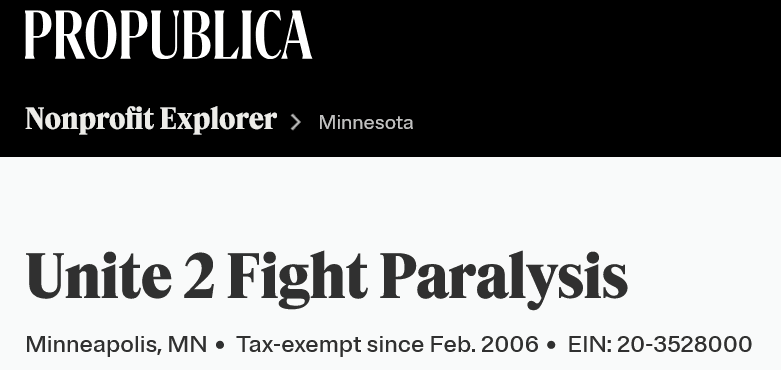
The ProPublica website has a really good, publicly available breakdown of U2FP’s annual budget over the years. In a nutshell it says that over the last 4 years, we’ve had an average annual revenue of $556K, an average annual expense of $571K, and average annual asset balance of $412K.
Here is what those numbers don’t capture: 2025 was the first year we received a larger grant (from the Craig H. Neilsen Foundation, for our SCI Consultants program). In all the other years, our revenue has come almost exclusively from donations. In a few of those years we’ve been rescued by individual, generous, anonymous donors who were aware of the shortfalls.
Our Work
The work that we do is strategic, long-term, and system changing. By its very nature, it doesn't tell a simple story or produce immediate results (eg, smiles from adaptive equipment or testimonials from experience camps).
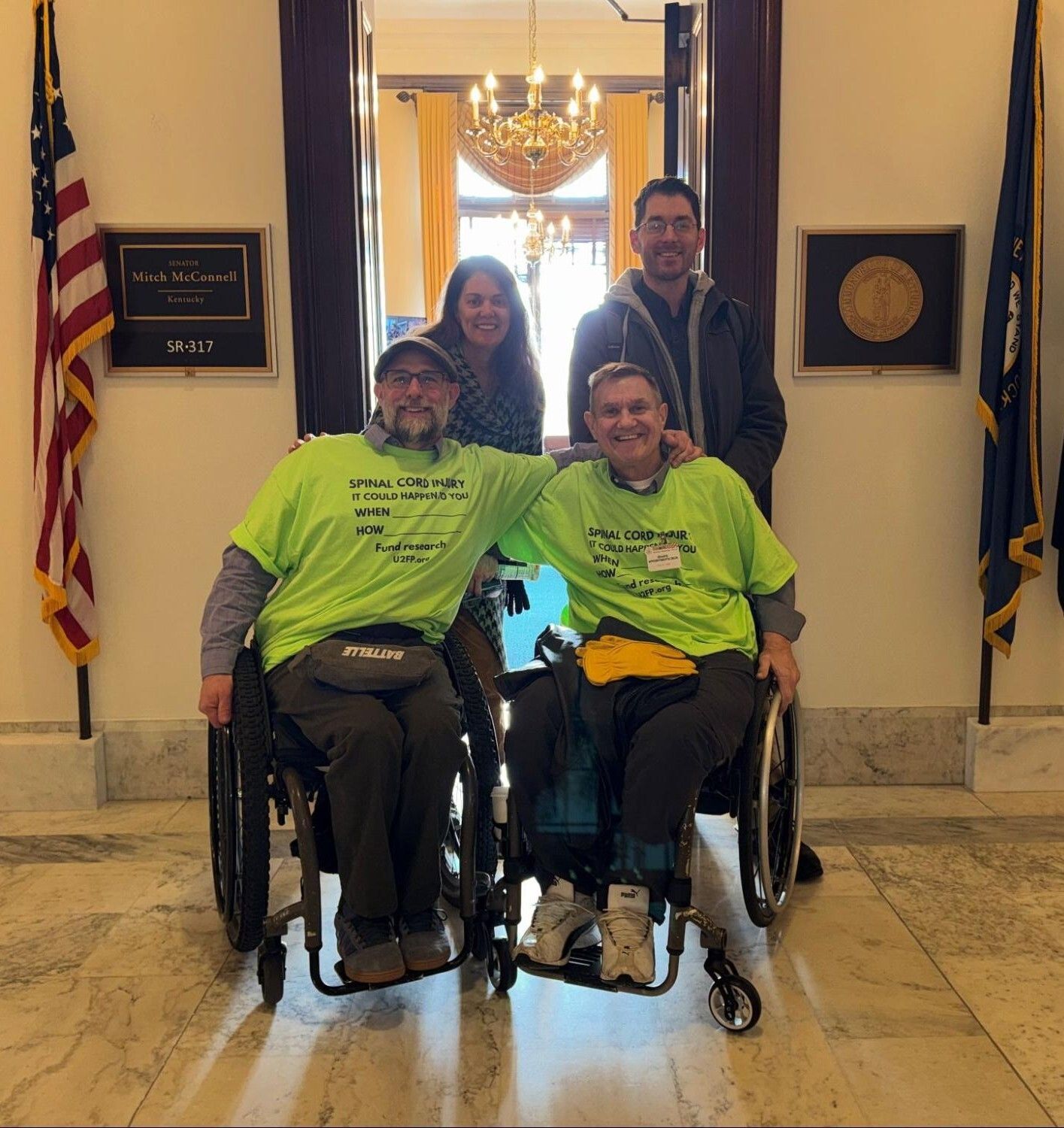
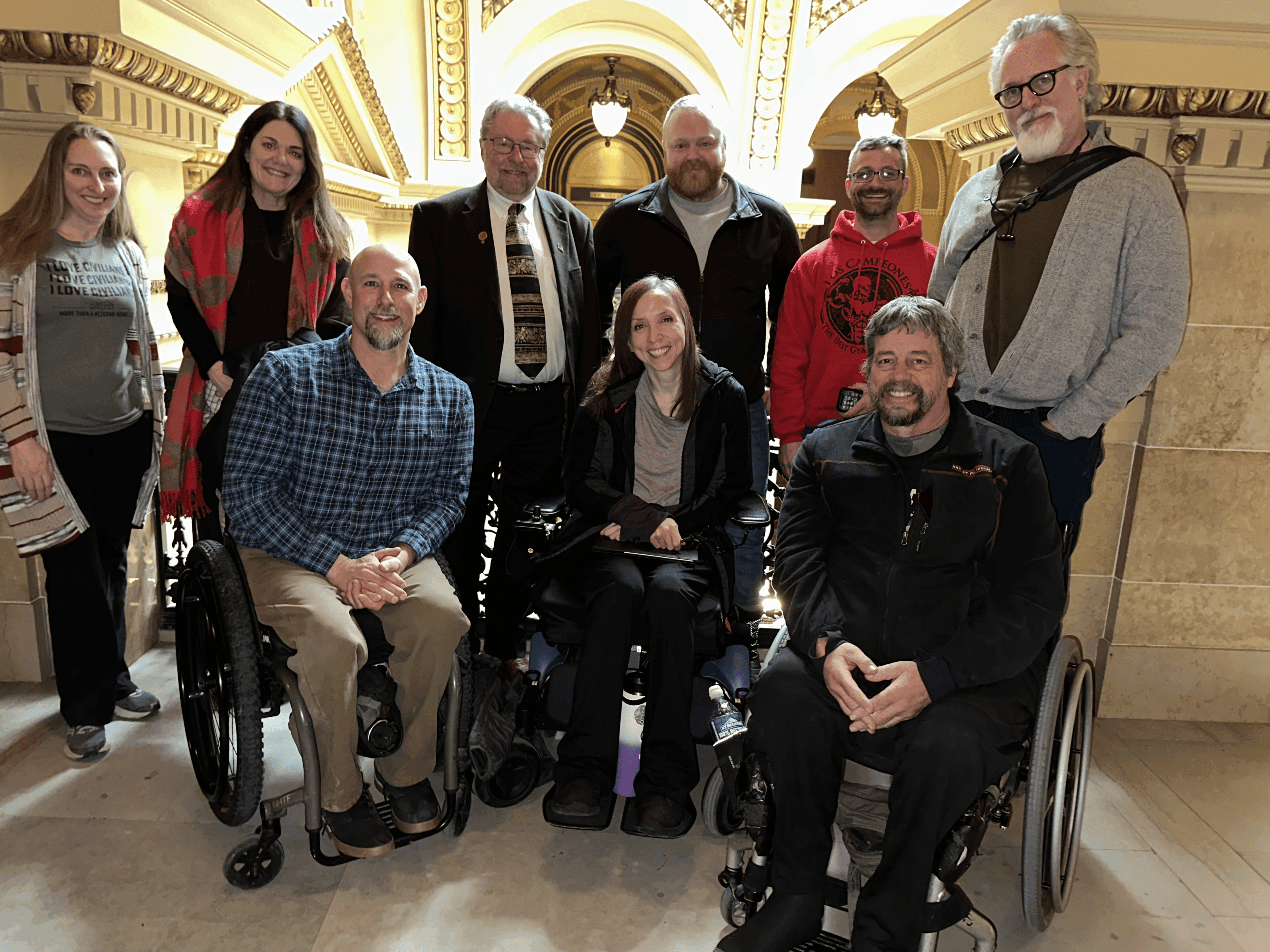
Me and U2FP board member Sasha Rabchevsky, PhD (front row) with Bethany Sullivan and Andrew Stewart, PhD (back row) during our Capital Roll in Washington, D.C. this past February.
Our most impactful work is in public policy, an area that foundations are very reluctant to fund because of that misunderstood word: lobbying. But that lobbying has yielded results, contributing over $50M toward state-level, community prioritized research during the last 11 years, and helping to restore $33M to federal SCI funding (DoD SCIRP). That’s $83M for translational SCI projects.
No other organization in the SCI space has driven this level of state and federal research investment. (Shout out to Dr. Patricia Morton’s ‘Quest for the Cure’ movement, which passed several state research bills in the 90s and was an inspiration for our Cure Advocacy Network.) While the gains for our community as a whole are the most important outcome, U2FP gets ZERO financial benefit from these legislative victories.
We are also developing a National Strategy to address the federal gaps in care and cure provisions for US citizens living with SCI. Our goal is to acquire accurate data about the incidence and prevalence of SCI in the US, the healthcare cost burden of SCI to the taxpayer, and how Federal dollars are being spent on research. We are identifying the barriers to progress in translational research and implementation of therapies for our community while proposing strategies to address those concerns.
None of us at U2FP are comfortable with having to always ask for money. That’s why we hired Quinn, she has no couth (kidding). Honestly, adding a Development Director was a deliberate decision. When we decided to add this position, we recognized that if we wanted to sustain this work long-term, we had to be serious about building the infrastructure to fund it. That investment has started to pay off through the growth of Team U2FP, donor development, grant awards, and fundraising events that didn't exist before.
Bothering our personal networks and making continuous donation asks is the last thing that we want to be doing. But we'd be doing this community a disservice if we stopped. It's a tension we live with every day, spending precious time fundraising instead of just doing the educating and advocating!
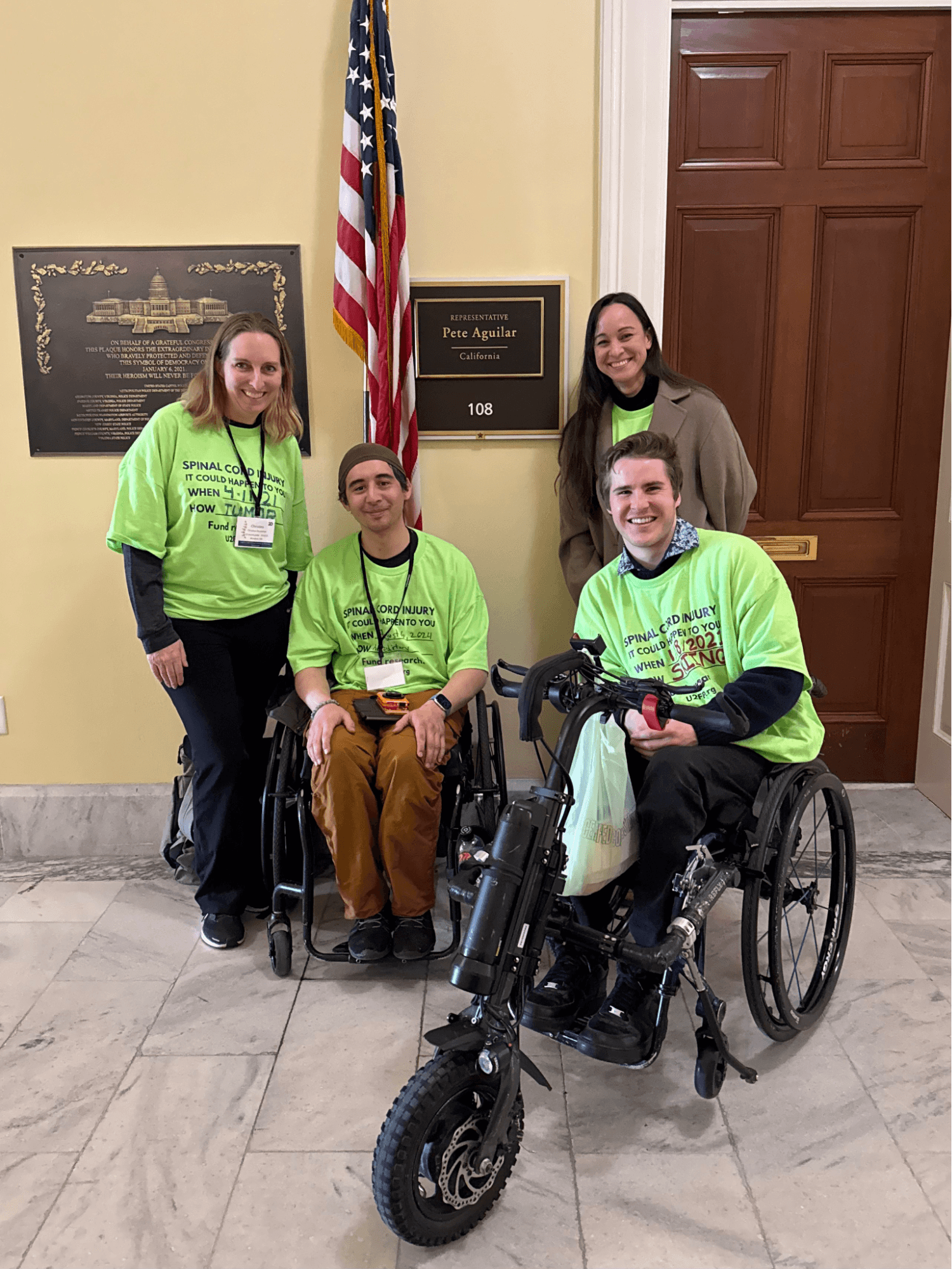
Christina Baurichter, Jackson Vaughn, Dr. Maya Hatch and Mason Branstrator at our Capital Roll in Washington, D.C. this past February.
This newsletter was my idea because I feel it's important for all of you who contribute time and resources to our work, to know the realities of this non-profit’s finances. I also wanted to reiterate our gratitude for those of you who donate - and especially our monthly donors - who have committed to keep us going.
My dream would be to find a collective of funders and philanthropists who could create an endowment to fund the operational costs of our work so we didn’t have to keep asking our community, who are already live with a costly condition.
But I want to drive this home: U2FP is your organization. Yes, we have staff because it's necessary to have dedicated folks creating and coordinating the delivery of educational and advocacy opportunities you take advantage of. But for those of you who show up to our meetings, to the Symposium, to the Capitols, who listen to the podcast and read the newsletters and consult in the labs and run the races…you are family to us. Seriously.
I didn't write this because I wanted to whine, but because that feeling of family motivated me to be as transparent as possible. You deserve to know the details and context of our finances. Hopefully, it helps those of you who are (like me at one time) skeptical of all the donation appeals understand the reasons behind our regular solicitations for funds.
This message is also a (long) way of me opening this discussion up to you! If you have any creative ideas, connections to philanthropists or donor networks that we currently aren’t in contact with, please respond to this message and let's talk! We want to focus on impact. Not keeping the lights on.
Thank you!