Apr 10, 2026
Remembering Reggie Edgerton
Sam Maddox
V. Reggie Edgerton, PhD, has died.
At the time of this writing no details have been released. According to Parag Gad, Reggie’s former post-doc at UCLA and now business partner who broke the news March 26 on LinkedIn, the death came as a huge shock.
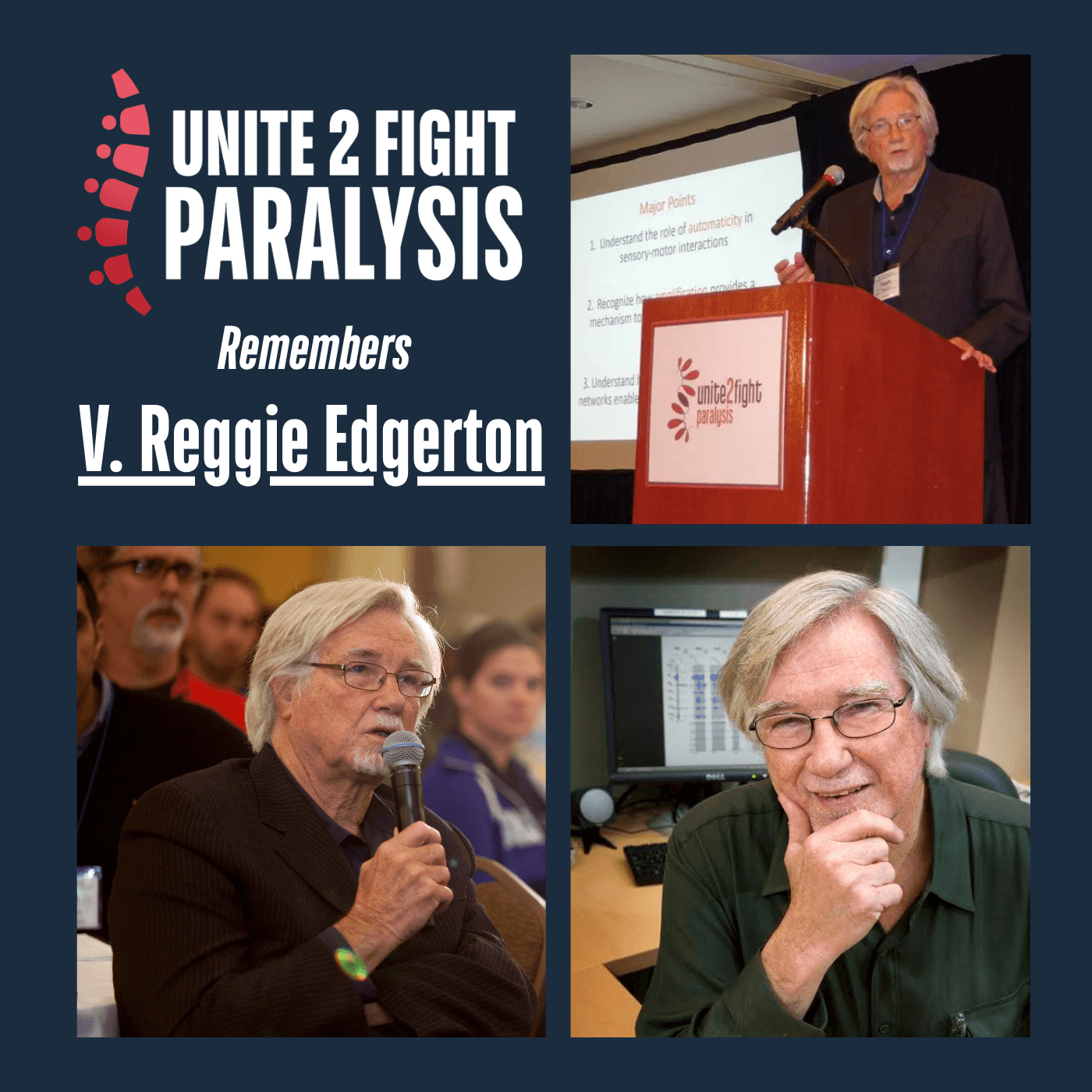
Edgerton was very close to U2FP, having participated in our annual Symposium several times and always generous with his time to answer questions about neuromodulation.
He was a guest on the CureCast podcast in April 2024. We are rebroadcasting that conversation, which exemplifies his continuing curiosity and ongoing quest for functional recovery. In that conversation, Edgerton also adds his caution about the need for more basic research to understand just how neuromodulation works.
Reggie was believed to be 85 (alas, there is no bio detail from UCLA and no Wikipedia page, an oversight that must be addressed). He apparently worked right to the end, continuing an astonishing six decade career, having landed in 1968 at UCLA to study the biology of movement. He published hundreds of papers. Search for him on PubMed to discover a wondrous trail of intellectual curiosity and research output regarding nerves, muscles, and recovery.
Edgerton’s legacy will live on in the literature, of course, but also across the field of spinal cord injury research. He mentored dozens of scientists and clinicians and touched the lives of many patients. He is often described as the ultimate scholarly gentleman.
Automaticity
What really set Edgerton on his path toward becoming the “godfather of spinal cord stimulation” was his time with Sten Grillner at the Karolinska Institutet in Stockholm, Sweden.
Grillner, who is almost 85 (and who does have a Wikipedia page) is one of the world’s foremost experts in the cellular basis of motor function. He is still going to work every day, though more in the realm of lamprey eels than humans.
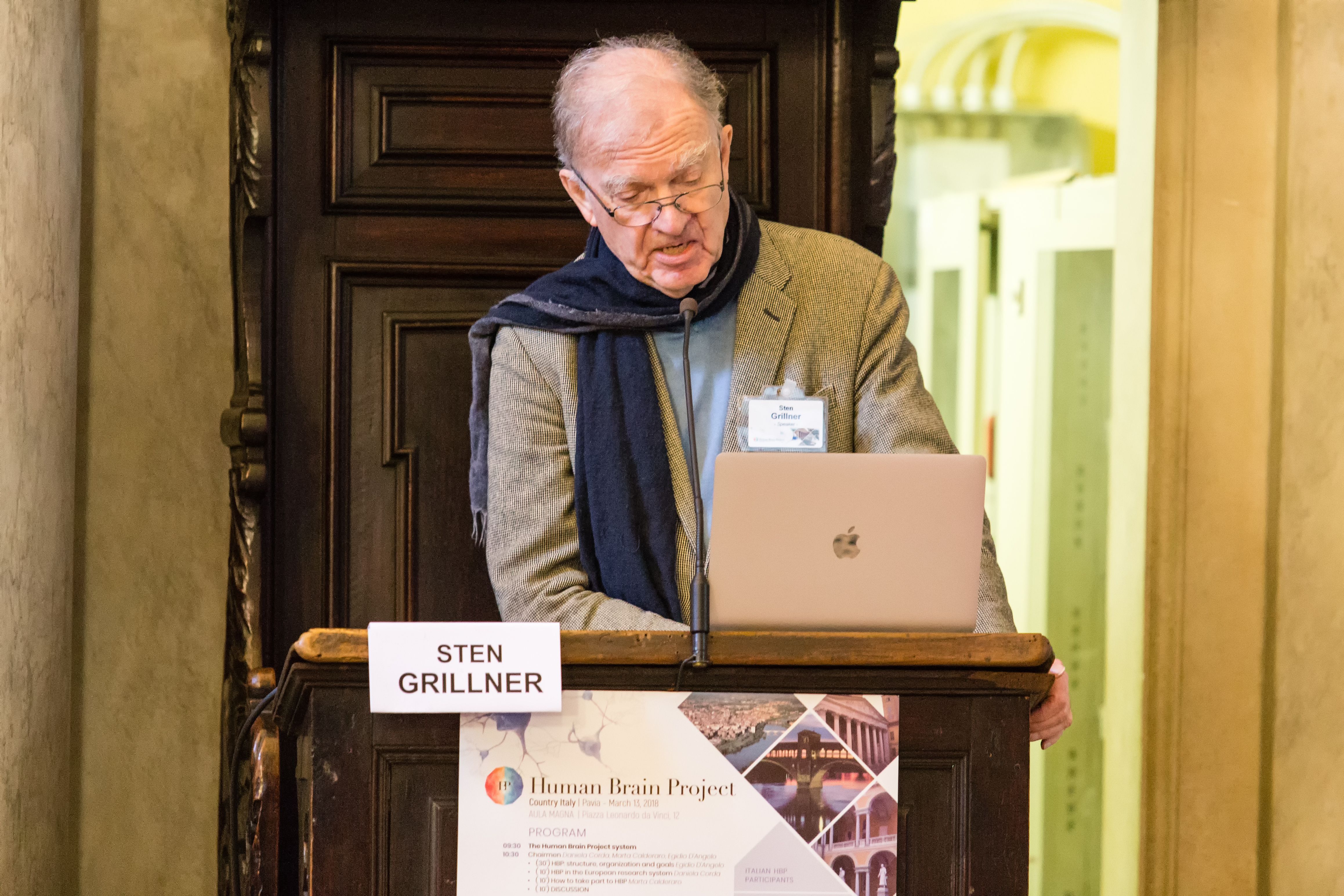
Sten Grillner. Image by Università di Pavia - Incontro Human brain project - March 13, 2018, CC BY 2.0 (https://commons.wikimedia.org/w/index.php?curid=78204043)
Here’s Grillner, from a 2020 paper published in the Journal of Neurophysiology called “The execution of movement: a spinal affair,” which was a tribute to his friend Reggie Edgerton.
In the spring of 1975, Reggie Edgerton joined our laboratory for a sabbatical stay. This was at a time when we were engaged with establishing the locomotor capability of the spinal cord by investigating the chronic or acute spinal cat.
Reggie got quite impressed with the ability of our chronic spinal kittens that could not only walk on the treadmill but also occasionally walk on the ground or even, on all four legs, up the stem of a birch. His engagement in investigating the locomotor capacity of the spinal cord has remained ever since, working on rodents, cats, and humans with spinal cord injury, translating the animal work to humans to the benefit of patients with spinal cord injury.
Edgerton, Grillner and others helped revive an early 20th Century British hypothesis (cats with disconnected brains could still move their legs because the spinal cord was in itself smart, apart from the brain). With some sensory motivation the cord could initiate leg movements without brain circuitry. This notion of spinal cord automaticity, featuring a built-in pattern generator, faced a lot of dogmatic resistance.
Motor recovery can’t happen in chronic paralysis, right? Of course Grillner and Edgerton and a legion of investigators crushed that assumption.
It wasn’t until the later 1990s, not coincidentally around the time Christopher Reeve began to challenge SCI research to focus more on the people living with SCI, that Edgerton became more widely known. The story cannot be fully told here but this was a heady time around the UCLA neuromod scene.
Post doc students Susan Harkema and Gregoire Courtine worked with Edgerton on activity based training using treadmills, and also experimented on animals using spinal cord stimulation. They even got Reeve to try a body-weight supported treadmill session. It didn’t work out too well, unfortunately, as his bones were too weak.
Reeve died in 2004, just ahead of the neuromod human trials wave. But Reeve’s Foundation re-upped its long love affair with Edgerton and his group.
2009 was a banner year for Edgerton, and for spinal cord stim. Rob Summers was the first human implanted with an epidural spinal cord stimulator in Louisville; he showed some unexpected recovery. Edgerton was lead author for the published study that broke out across the national news media. Harkema was the project lead and first author.
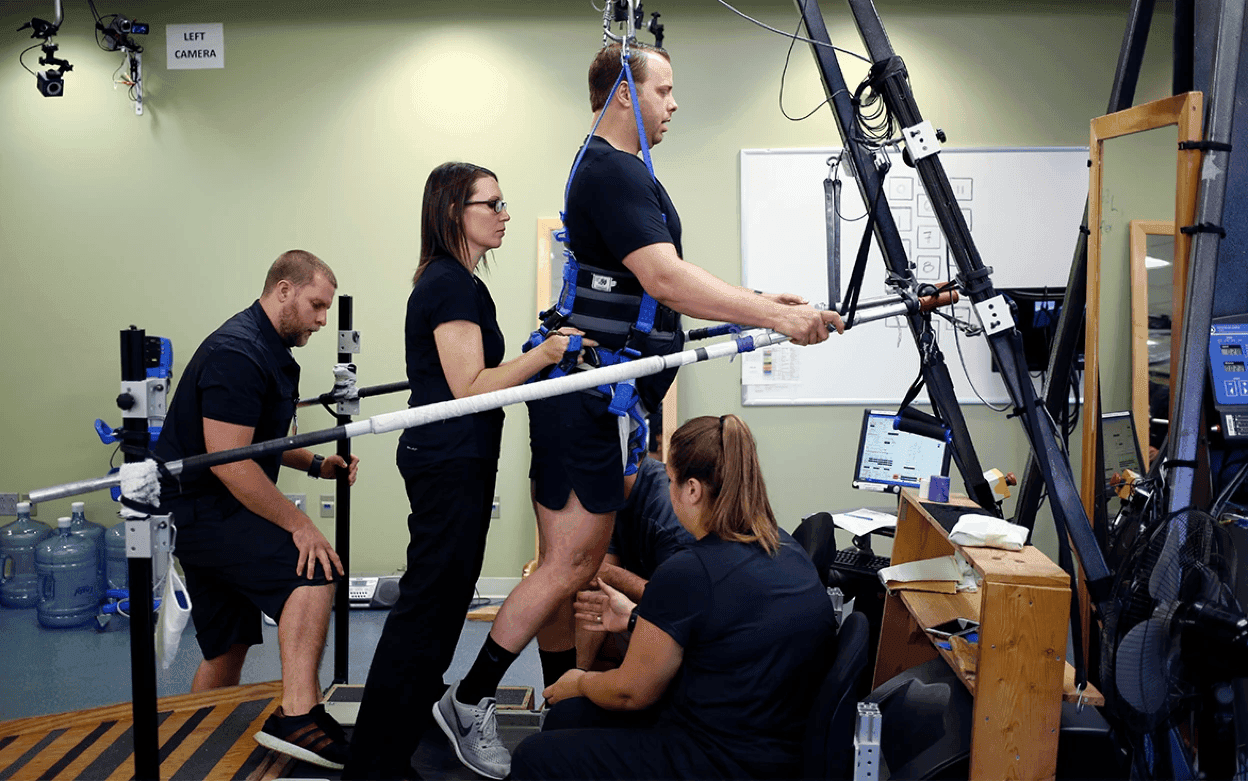
Image credit: Luke Sharrett for Nature (https://doi.org/10.1038/d41586-019-02306-z)
A few more patients got spinal cord stim implants in Louisville. A group at the Mayo Clinic in Rochester, including Megan Gill, Peter Grahn, Igor Lavrov, Kendall Lee, and Kristin Zhao were mentored by Edgerton; this 2017 study validated the work from the Harkema group.
A Budding Industry
Edgerton is a central figure in the commercialization of spinal cord stim. In 2011, Edgerton, Harkema and Joel Burdick from Cal Tech hooked up with podiatrist entrepreneur Nick Terrafranca to form NeuroRecovery Technologies with Terrafranca as CEO. The plan was to move spinal cord stim from academia to industry, starting out by improving the off-the-shelf pain treatment stimulators Harkema’s group had been implanting.
In 2015, still hunting for breakout funding for an implantable system, NRT pivoted toward a noninvasive stim system, inadvertently. Edgerton colleague Yury Gerasimenko went home to Russia and showed up back at UCLA with a skin-surface stimulator, and it worked. A number of clinical experiments took place in Edgerton’s lab, with encouraging results.
Jumping ahead, NRT merged with a group called GTX, fronted by Gregoire Courtine, in Switzerland. That entity later became ONWARD, a company that has a skin surface stim device on the market and which is beginning a trial for an implanted system addressing blood pressure management.
Edgerton did not hop on the ONWARD bandwagon, although he did over the years disclose a financial interest in the company. Instead, he and former student and NRT collaborator, Parag Gad, started a competing company, SpineX, to develop, test and market a transcutaneous device for spinal cord injury and other neurological conditions. They call their device SCONE; clinical testing has shown effectiveness for bladder recovery, and for quieting muscle tone in children with cerebral palsy.
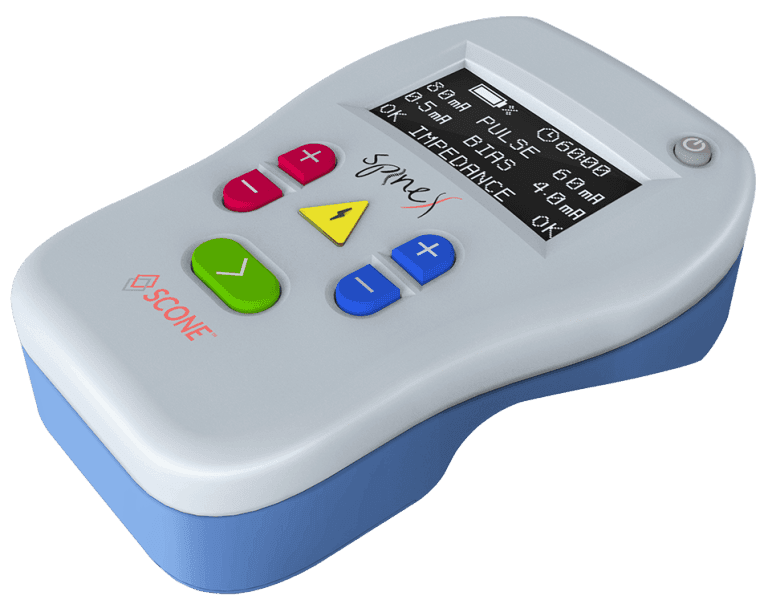
Image of the SCONE control device from the SpineX website.
A third stim company, ANEUVO, also emerged from UCLA, which has a solid clinical research profile and already has regulatory approval to sell its transcutaneous device in Europe.
Edgerton didn’t directly participate in this company but he collaborated on electrode development with ANEUVO founder Wentai Liu, in the UCLA engineering department, and his postdoc, Yi-Kai Lo (see here and here). Liu and Lo started Niche Bio in L.A. in 2016, changing the name to ANEUVO in 2021. The company was in the news last week, having raised $22 million from investors to continue developing its ExaStim device.
Edgerton casts a long shadow over the spinal cord injury research field. May he rest in peace, knowing that his unfinished work will be carried forward by a cadre of investigators inspired by his lifelong commitment to following the data.
I’ll leave the last words of this appreciation of Reggie to Parag Gad, from his death notice:
Reggie was a true scientist, someone who let his work speak for itself. He encouraged his students to question, to explore beyond convention, and to challenge what was considered “normal.” That freedom to think differently is a gift that continues to guide me and the work we do at SpineX.
There are a few lessons from him that will stay with me forever:
1. Don’t let bias guide your decisions—always ask, “What is the data telling me?”
2. If it was easy, everybody would be doing it.
3. My job is not to convince you. My job is to present my data—it’s up to you to decide how you wish to proceed.