
Relentless Curiosity (Episode 141)
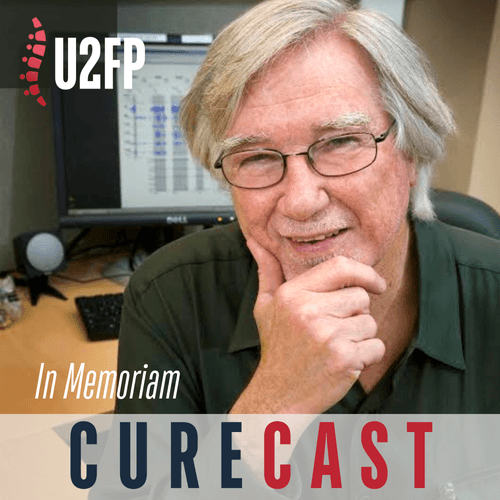
Guest: Reggie Edgerton
We are very sad today as we re-broadcast this conversation with Reggie Edgerton. You may have heard that Reggie has died. We've lost a brilliant mind, and a long-standing research scientist who was focused on spinal cord injury. Reggie was a frequent presenter at our Symposia and a generous teacher and mentor to those in and outside the academy.
We wanted to rebroadcast this episode as a remembrance of him but also because Jason and I were so impressed in this interview with Dr. Edgerton’s relentless curiosity, despite his pedigree and experience. That he was still, all these years later, trying to puzzle over how to improve plasticity after a spinal cord injury using neuromodulation and rehab.
It was always a pleasure talking to Reggie. We are very sad that he is gone. I hope you listen to the interview and enjoy just how influential he was to the field of SCI research. Thank you, Reggie! Thank you for all the years of sharing your relentless curiosity with us. It's much appreciated.
Listen on: Spotify | Apple Podcasts | Soundcloud
Bumper music: Dig a Hole by Freaque
Guest Bio
V. Reggie Edgerton, PhD studied neuromuscular plasticity for the last five decades. In the last 40 years his focus was on the physiology of plasticity of the nervous system with an emphasis on spinal physiology and in developing neuromodulatory strategies to maximize recovery from severe neuromotor dysfunctions. Most of this effort was focused on spinal epidural and noninvasive transcutaneous stimulation and pharmacological modulation, combined with activity dependent interventions to regain sensorimotor functions after severe paralysis. After having demonstrated the feasibility of using epidural stimulation techniques in human subjects with complete paralysis, it became evident that severely spinal injured individuals can recover significant sensory-motor and other organ system functions. A primary goal of Reggie's was to significantly improve the technology of electrical stimulation and identify optimal pharmacological drugs that can facilitate recovery of motor function when combined with training (motor learning). The second point of urgency that became apparent was the need for more clearly defined mechanisms by which recovery of motor and autonomic function occurs following complete paralysis. The physiological results provide compelling evidence that spinal interneurons can be transformed to obtain remarkably normal coordinated motor tasks using spinal transcutaneous to rapidly change the physiological states of neuronal networks in the spinal cord and the brain. Dr. Edgerton was reasonably certain towards the end of his life that the field can achieve a much more adaptable and highly successful modulatory methodology that will enable a focus on the modulation of a specific population of interneurons along the spinal axis to selectively activate different motor pools and thus muscles. His recent results demonstrated that we can effectively neuromodulate networks of the brain by stimulating spinal networks. This is a process of continuing technical development, beginning with the initial study of identifying the anatomical location interneurons that generates central pattern generation. This was reported in the laboratory of Sten Grillner in 1976. Given what we know today and the potential of capitalizing on the functional automaticity of the spinal circuitry in achieving significant recovery of locomotor function, the present proposal is a continuing effort to capitalize on these initial fundamental observations.
Reggie's lab, in conjunction with Dr. Susan Harkema and Yury Gerasimenko was the first to demonstrate that multiple functions could be recovered with a combination of spinal neuromodulation and activity-dependent interventions in individuals that had been completely paralyzed for more than a year. This was demonstrated initially using the standard surgically implanted device that is approved for treating pain. The first four subjects regained voluntary movement, assisted stepping and independent standing. But in parallel, improved sexual, bladder, bowel functions, improved temperature control, cardiovascular responses to sustain normal blood pressure when challenged or thostatically regaining the ability to sweat, and regained numerous sensory modalities with different degree functionalities. Similar results were obtained in using the surgical implant at cervical segments and regaining upper limb functions. The labs then performed similar experiments after developing noninvasive methods which provided similar outcomes as the surgical implants. During these developments they performed extensive experiments in animals demonstrating that pharmacological approaches that can be used to facilitate recovery of some of the functions lost after decades of complete paralysis. These labs recently demonstrated that similar approaches have rather remarkable responses in regaining upper limb functions after chronic paralysis due to cervical spinal injuries and in treating multiple dysfunctions in cerebral palsy.
Dr. Edgerton's major goal was to apply three interventions - transcutaneous, spinal neuromodulation, neuromodulation of the motor cortex, and motor training using a robotic device (Ekso Bionics) - to facilitate brain-spinal networks to regain synergistic overground locomotor functions in humans with a chronic spinal cord injury (SCI). At this time, however, the exciting possibilities to begin to understand and demonstrate the wisdom of studying how the brain and spinal cord works as an integrated system, using some of the new imaging and physiological methods that are currently evolving to help in understanding how we function as a totally integrated organism under in vivo conditions.
Related Podcasts
-
An interview with Gregoire Courtine, the Chief Science Officer of ONWARD Medical, as well as a former student of Reggie Edgerton. -
An interview with Susan Harkema, from the University of Louisville. A former student of Reggie Edgerton's, we discuss her long standing work in neuromodulation, neuroplasticity and locomotor training to discover and understand the potential for functional recovery after Spinal Cord Injury...
Related Articles
-

Sam Maddox reports on the passing of V. Reggie Edgerton, including the vast contributions he made to the field of SCI research. -
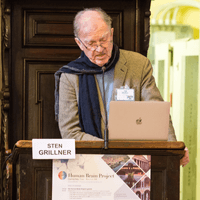
A tribute to the work of Reggie Edgerton from his old colleague Sten Grillner from back in 2020, published in the Journal of Neurophysiology.